Federico Allen Hinojosa: A Pioneer of Mexican-American Journalism (1888–1952)
Published: August 30, 2023
Updated: August 31, 2023
Federico Allen Hinojosa was born Felipe Allen Hinojosa on December 7, 1888, in Lampazos (de Naranjo), Nuevo León, Mexico, to Juan Allen de los Angeles and Leonides Hinojosa Santos. He went by the name Federico for his entire life and was a career journalist and activist who lived and worked in San Antonio, Texas, from 1914 to 1940 to strengthen cultural ties with Mexico and to illuminate issues facing the city’s immigrant and Mexican-American community. He was among a group of prolific writers, both men and women, from Monterrey who immigrated to San Antonio during that time and maintained a lively dialog focused on Mexican life and culture in both Mexico and San Antonio during and after the Mexican Revolution. Prior to 1914 he served as the editor-in-chief of El Monterrey News, and worked at La Prensa and El Noticiero, daily newspapers in Monterrey.
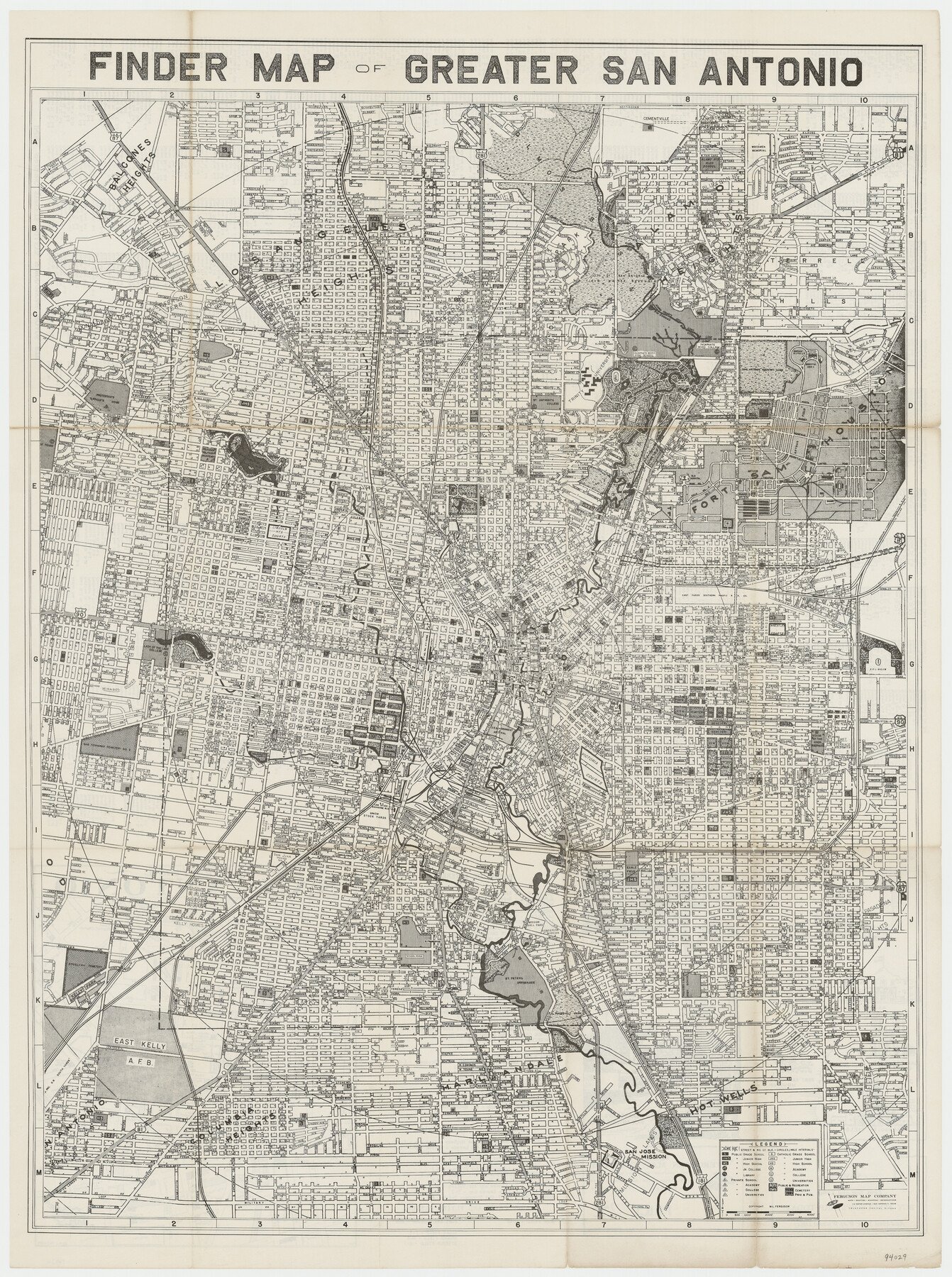
In 1914 Allen Hinojosa joined La Prensa, San Antonio’s Spanish-language newspaper founded by Ignacio E. Lozano, which was expanding from a weekly to a daily paper. Allen Hinojosa lived in San Antonio’s Barrio Laredito, a historic West Side neighborhood where many immigrant-refugees from the Mexican Revolution settled. Many of the homes in this area, including those where Allen Hinojosa lived, were destroyed during San Antonio's downtown “Urban Renewal” development period from the late 1940s through the early 1970s.
Though Allen Hinojosa’s published writings went largely unattributed, due to standard news industry practice in the early century of not including a byline, he was an accomplished writer and editor. From 1922 to 1940 he served as La Prensa’s managing editor. The widely-circulated publication served all of Spanish-speaking San Antonio and beyond and was particularly known for publishing news from Mexico in support of the exile community, a group of Mexican nationals who had been forced out of Mexico for their anti-revolutionary political views. These immigrants were comprised of well-educated and successful intellectuals and business people who, once they arrived in the United States, were active in the Mexican American communities they joined.
On October 24, 1924, Allen Hinojosa married Beatriz Blanco of Monclova, Coahuila, Mexico, a noted writer, artist, and a journalist and editor at La Prensa. Lozano and his wife Alicia Elizondo de Lozano were witnesses at their wedding at San Fernando Cathedral. The bride’s sister Maria del Refugio “Cuca” Sapia-Bosch was a well-known flamenco dancer in San Antonio.
In 1931 the Allen Hinojosas, the Lozanos, Henry Guerra and wife Elvira, and several other couples co-sponsored a shop, the Mission Curio Store/Latin-American Exchange, which sold handcrafted art from Mexico and San Antonio. Allen Hinojosa also worked with other local leaders on several initiatives to try to alleviate unemployment during the Great Depression and to raise funds for West Side medical initiatives.
In 1936, toward the end of his editorship at La Prensa, the Allen Hinojosas moved to Mahncke Park, a historic North Side San Antonio neighborhood. In a modest assertion of Mexican pride, and perhaps inspired by their compatriot neighbor, Aureliano Urrutia, a well-known Mexican surgeon and art collector who lived nearby, the couple built a small Mexican tile fountain in their front yard, the ruins of which could still be seen in the 2020s.
In 1939 and 1940 Allen Hinojosa wrote two important pieces. The first was an interview of Dr. Urrutia, whom he greatly admired, in which he offered a close-up portrait of the exiled physician in his private garden, Miraflores, along the San Antonio River. Published in Mexico, the article weaves together the idyllic setting and the doctor’s personality and gives Urrutia’s perspective on the Mexican Revolution and toward the future of the country. The physician compared the revolution to a body that recovers more strongly after fighting off a life-threatening illness.
Allen Hinojosa’s second significant writing was a booklet entitled El Mexico de Afuera, printed by Artes Graficas, a San Antonio small press, in 1940. Its title refers to the Mexican community that relocated during the revolution to Texas and other southwestern United States lands formerly belonging to Mexico, while maintaining their cultural observances and languages. Writing on the occasion of his retirement from La Prensa and his repatriation to Mexico after twenty-five years, Allen Hinojosa described his feelings as he traveled through the countryside of northern Mexico, connecting the features of the terrain to the varied heritages and characteristics of the Mexican people.
The essay ultimately focuses on the issue of Mexican repatriation which began around 1935 and discusses the stark disparities that existed for so many Mexicans in both countries. It details both the hope and the limitations of Mexican initiatives aimed at attracting potential workers and the poverty and challenges of many Mexican immigrants in the United States at that time. Allen Hinojosa also recognized those of the México de Afuera who were political exiles, who left Mexico reluctantly, but who transplanted themselves and brought their own talents to benefit their new communities. He observed that thousands of them returned to Mexico around this time (ca. 1935), but he had a special place in his heart for a significant number who chose not to return and described them as:
…a vigorous and potential people...possessing undeniable virtues,...creative force,...love of work,...who have known how to rise thanks to their own efforts and stand out for their own merits. Merchants, industrialists, doctors, lawyers, engineers, educators, students, theater, radio and film artists...mechanics, farmers, workers, etc….who are not only respected but admired for their tenacious and meritorious work.
He lamented that though they “love Mexico and [are] reluctant to abandon their citizenship,” they would remain in the United States, where they would be more free and better off economically. The booklet ends with a “Who’s Who” of more than 100 mexicanos de afuera who remained in San Antonio.
Federico Allen Hinojosa died in 1952 and was buried in Panteón del Carmen, Monterrey, Nuevo Leon, Mexico. His wife, Beatriz Blanco, preceded him in death on March 26, 1944, and was buried in Panteón Español in Mexico City.
Bibliography:
Federico Allen Hinojosa, El México de Afuera (San Antonio: Artes Graficas, 1940). Claudia Guerra, ed., Three Hundred Years of San Antonio and Bexar County (San Antonio: Trinity University Press, 2018). La Prensa, January 1, 1913; December 17, 1917; April 1, 1922. Juanita Luna-Lawhn, María Luisa Garza: Novelist of El México de Afuera (San Antonio: Guadalupe Cultural Arts Center, 2000). San Antonio Express, October 26, 1924; February 8, 1931; January 31, 1932; February 19, 1933. Anne Elise Urrutia, Miraflores: San Antonio’s Mexican Garden of Memory (San Antonio: Trinity University Press, 2022).
Categories:
Time Periods:
Places:
The following, adapted from the Chicago Manual of Style, 15th edition, is the preferred citation for this entry.
Anne Elise Urrutia, “Allen Hinojosa, Federico,” Handbook of Texas Online, accessed March 09, 2026, https://www.tshaonline.org/handbook/entries/allen-hinojosa-federico.
Published by the Texas State Historical Association.
TID:
FALHI
All copyrighted materials included within the Handbook of Texas Online are in accordance with Title 17 U.S.C. Section 107 related to Copyright and “Fair Use” for Non-Profit educational institutions, which permits the Texas State Historical Association (TSHA), to utilize copyrighted materials to further scholarship, education, and inform the public. The TSHA makes every effort to conform to the principles of fair use and to comply with copyright law.
For more information go to: http://www.law.cornell.edu/uscode/17/107.shtml
If you wish to use copyrighted material from this site for purposes of your own that go beyond fair use, you must obtain permission from the copyright owner.
- August 30, 2023
- August 31, 2023
This entry belongs to the following special projects: