The Bluebonnet Brigade: A Women's Organization Supporting Troops During WWII
By: Emory Glover
Published: January 22, 2025
Updated: January 22, 2025
The Bluebonnet Brigade was a women’s organization created in 1941 just prior to U.S. entry in World War II to take part in recreational activities and help boost morale to troops stationed at Camp Barkeley in Abilene, Texas. Such civilian organizations were mobilized in cities across the United States to help provide goods and services for troops. Many groups such as the Young Men’s Christian Association, Young Women’s Christian Association, Salvation Army, and other similar agencies joined to create the United Service Organizations (USO). The USO helped organize and host events for troops stationed across the nation and worked with local organizations to provide entertainment for troops.
In Abilene, as the first troops arrived at Camp Barkeley in early 1941, citizens regarded the large influx of young men as presenting both an economic opportunity as well as a potential threat to the moral and social standards of the town. Thus, a properly supervised group of young women of “good character and reputation” could help with providing a wholesome recreational outlet for the soldiers, present the town of Abilene in a favorable light to newcomers, and foster a sense of patriotism and unity for the war effort. The Abilene Defense Recreation Council sponsored a group styled after the Shreveport Military Maids, which adopted a military ranking structure, and originally named the organization the Minute Brigadiers of Abilene. By December 1941 the name was changed to the Bluebonnet Brigade, after the Texas state flower.
The Bluebonnet Brigade, working with the USO, sponsored events to support the troops of the Forty-fifth and Ninetieth Infantry Divisions, Eleventh and Twelfth Armored Divisions, and members of the Medical Administrative Corps at Camp Barkeley. The Bluebonnet Brigade’s organizational military structure provided an effective chain of command to give out orders. The first leader of the Bluebonnet Brigade, Ruth Leach (whose husband Roy B. Leach was a member of the local chamber of commerce and city council), had the title/rank of brigadier general, and her second in command or adjutant was Jeannette R. Graham. The adjutant also served as secretary of the organization. Ethel C. Knight (widow of Army Air Corps Maj. Louis R. Knight) took over as brigadier general in May 1942 and served until the brigade’s end.
The vast majority of young women, known as cadets, were between the ages of seventeen and twenty-five. As well as preferably being a young age, applicants had to have a good reputation within the community and show good character. The admission process included a written application, personal interview, and character references. Preferably cadets attended at least one event a week, and they were required to go to at least three events each month to keep their membership. Cadets were under the supervision of their captains—women who were older than the cadets but had leadership qualities. Each captain had five cadets under them and reported to their major. The majors of the Bluebonnet Brigade were mature older women with proven leadership ability and high moral standards. They commanded five captains and only reported to the brigadier general, who supervised between ten to fourteen majors at any point in time. The brigadier general and her majors selected which battalion to use for events. From there the majors would contact their captains and have them contact their cadets, who had to follow all rules that were given to them. The organization did not include Blacks or Hispanics. One Japanese American was listed on membership rolls.
The first event of the Bluebonnet Brigade was a Halloween dance in 1941. Early activities were successful, as the December 2, 1941, edition of the Abilene Reporter-News heralded the organization as an “effective approach to the problem of handling soldier-civilian relations.” Dances were by far the most popular gatherings. They also hosted parlor games, discussion groups, music and drama events, parties, and activities that encouraged hobbies. Cadets attended outdoor sports games and picnics at Abilene State Park and Lake Fort Phantom Hill, and festivities also occurred at Camp Barkeley.
The women of the Bluebonnet Brigade had to follow strict rules. Once they arrived at a heavily-chaperoned dance or event, they had to sign in and were not allowed to go outside with a soldier. No alcoholic drinks were allowed, and once the night was over, cadets had to sign out. Each cadet had a personal identification card as well. The leaders of the brigade were strict and enforced measures intended to help keep the women safe and preserve the moral beliefs of the time in Abilene. Outside of the Bluebonnet Brigade sanctioned events, some of the women did go on dates with the soldiers. Accepted events included other USO dances, church functions, and going to the movies or the local drugstore or restaurant.
The Bluebonnet Brigade had a short run of only four years but was successful in its endeavors. Camp Barkeley News reported that by February 15, 1942, the women of the Bluebonnet Brigade had already danced 12,096 hours of the jitterbug. At any given time during its existence, the Bluebonnet Brigade had approximately 400 women willing to volunteer their time. In its four years of operations, the brigade had a total of more than 1,000 women, and it sponsored more than 400 events. The organization dissolved with the end of World War II and closing of Camp Barkeley.
Bibliography:
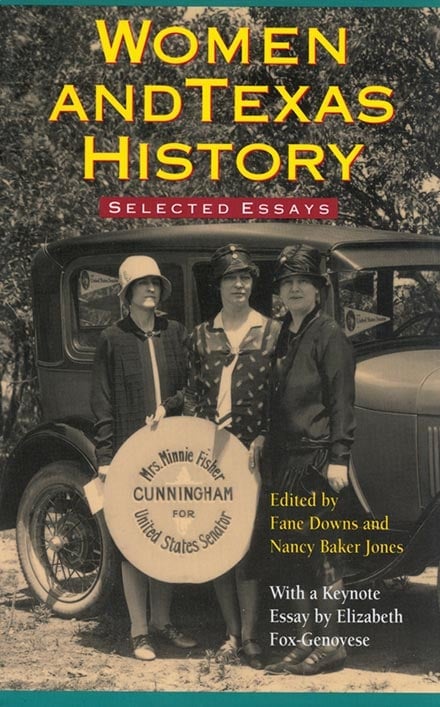
Abilene Reporter-News, December 2, 1941. Angela Boswell, Women in Texas History (College Station: Texas A&M University Press, 2018). Camp Barkeley News, February 20, 1942; November 11, 1942. Tracy McGlothlin Shilcutt, The Bluebonnet Brigade: Women and War in Abilene, Texas: 1941–1945 (M.A. thesis, Abilene Christian University, 1993). Robert W. Sledge, A People, A Place: The Story of Abilene, Volume 2, The Modern City 1940–2010 (Buffalo Gap, Texas: State House Press, 2011).
The following, adapted from the Chicago Manual of Style, 15th edition, is the preferred citation for this entry.
Emory Glover, “Bluebonnet Brigade,” Handbook of Texas Online, accessed March 09, 2026, https://www.tshaonline.org/handbook/entries/bluebonnet-brigade.
Published by the Texas State Historical Association.
TID:
VGB01
All copyrighted materials included within the Handbook of Texas Online are in accordance with Title 17 U.S.C. Section 107 related to Copyright and “Fair Use” for Non-Profit educational institutions, which permits the Texas State Historical Association (TSHA), to utilize copyrighted materials to further scholarship, education, and inform the public. The TSHA makes every effort to conform to the principles of fair use and to comply with copyright law.
For more information go to: http://www.law.cornell.edu/uscode/17/107.shtml
If you wish to use copyrighted material from this site for purposes of your own that go beyond fair use, you must obtain permission from the copyright owner.
- January 22, 2025
- January 22, 2025
This entry belongs to the following special projects: