Camp Capron: Training Ground for the Thirty-Third Volunteer Infantry
By: Lewis F. Fisher
Published: January 30, 2024
Updated: April 29, 2025
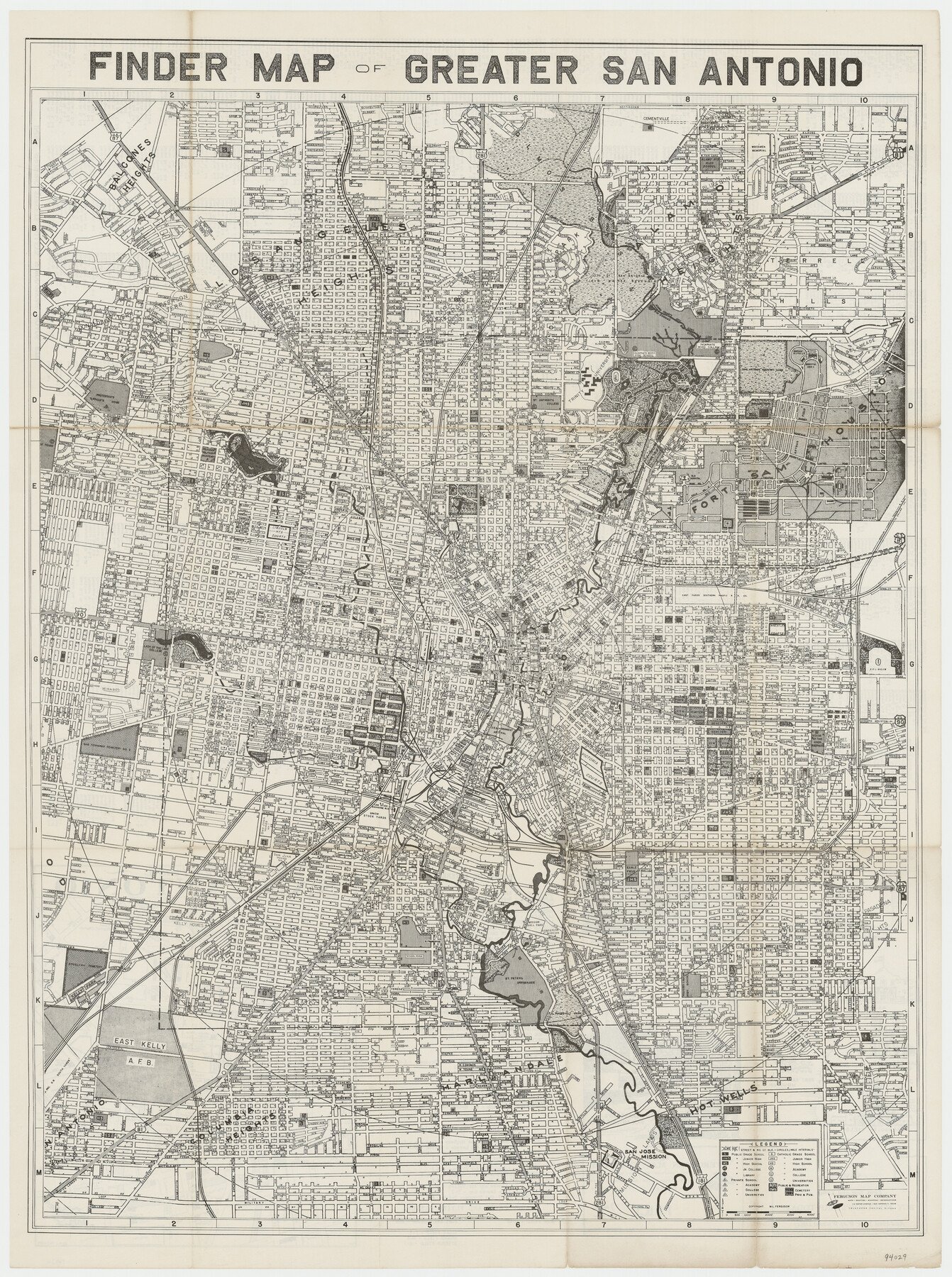
Camp Capron was created to train recruits for the United States Army’s Thirty-Third Volunteer Infantry, being organized to help combat what was then known as the Philippine Insurrection that followed the end of the Spanish-American War. The site earlier was known as Camp Mosby, home of the Fourth Texas Volunteer Infantry, disbanded after the war ended. Located two miles north of downtown San Antonio next to River Avenue (present-day Broadway), the land was leased from the San Antonio Jockey Club, which was no longer using its racetrack complex on the site.
In mid-July 1899 the tents and equipment used for Camp Mosby were taken out of storage from Fort Sam Houston and hauled by wagon nearly three miles east. Regimental headquarters and a post office were then set up in the Jockey Club’s racetrack clubhouse. Hospital tents were staked southwest of the grandstand, and the racetrack was once again used as a campsite and parade ground. Camp commander Col. Luther Hare named the installation in memory of Capt. Allyn Kissam Capron, a Rough Rider trained in San Antonio and a casualty of the Spanish-American War’s first land engagement in Cuba. Maj. Albert Lieberman was regimental surgeon of the Thirty-third, which also had a regimental band. In late August a concert and dance was held on the grounds between the clubhouse and grandstand.
Army recruiters across Texas sought men for the new regiment, sending them back at the rate of seventy-five to a hundred a day. Training included ten days of target practice at Fort Clark, a one-hundred-mile train ride to the west. The regiment reached its complement of more than 1,200 men by mid-August and a month later was judged combat ready. On September 15, 1899, the men lined up in the shade of the grandstand and marched in formation to the Southern Pacific depot, where they boarded four waiting trains to take them to San Francisco. From there they took a troop ship to Manila and fame as a top combat unit in ending the insurrection. Tents and necessary equipment were shipped with them. The rest went back to Fort Sam Houston and Camp Capron was closed. The site is now part of the Brackenridge Park Golf Course.
Bibliography:
Jack David Anderson, Service Honest and Faithful: The Thirty-Third Volunteer Infantry Regiment in the Philippine War, 1899–1901 (Ph.D. dissertation, University of North Texas, 2017). Lewis F. Fisher, Brackenridge: San Antonio’s Acclaimed Urban Park (San Antonio: Trinity University Press, 2022). Houston Post, August 19, 1899. San Antonio Daily Express, August 2, 16, 30, 1899.
The following, adapted from the Chicago Manual of Style, 15th edition, is the preferred citation for this entry.
Lewis F. Fisher, “Camp Capron,” Handbook of Texas Online, accessed March 09, 2026, https://www.tshaonline.org/handbook/entries/camp-capron.
Published by the Texas State Historical Association.
TID:
QCC64
All copyrighted materials included within the Handbook of Texas Online are in accordance with Title 17 U.S.C. Section 107 related to Copyright and “Fair Use” for Non-Profit educational institutions, which permits the Texas State Historical Association (TSHA), to utilize copyrighted materials to further scholarship, education, and inform the public. The TSHA makes every effort to conform to the principles of fair use and to comply with copyright law.
For more information go to: http://www.law.cornell.edu/uscode/17/107.shtml
If you wish to use copyrighted material from this site for purposes of your own that go beyond fair use, you must obtain permission from the copyright owner.
- January 30, 2024
- April 29, 2025