The History of Capital Punishment in Texas
By: Paul M. Lucko
Published: November 26, 2024
Updated: June 26, 2025
Capital punishment, also referred to as the “death penalty,” has existed in Texas since the Spanish and Mexican colonial periods as the ultimate legal sanction for certain crimes. Courts rarely imposed the sanction when Texas was part of Northern New Spain (1718–1821, see SPANISH TEXAS) and later newly independent Mexico (1821–36, see MEXICAN TEXAS). Records compiled by researcher M. Watt Espy provide an important chronological list of executions in Texas and other states, although his compilation apparently overlooked the few instances where legal executions occurred in the Spanish colony. Drawing upon the Espy File, journalists and other investigators usually list George Brown as the first person executed in Texas. Convicted for piracy and hanged on a gibbet at Bolivar Pass on November 6, 1819, Brown’s death was the result of an unsuccessful invasion of Spanish Texas by James Long and his partner, pirate Jean Lafitte. Following what one historian described as a “kangaroo trial” facilitated by Lafitte, Brown was executed through the illegitimate authority of a small band of filibusterers and pirates representing a diplomatically unrecognized government. The execution clearly violated laws that required Spanish government approval of all death sentences.
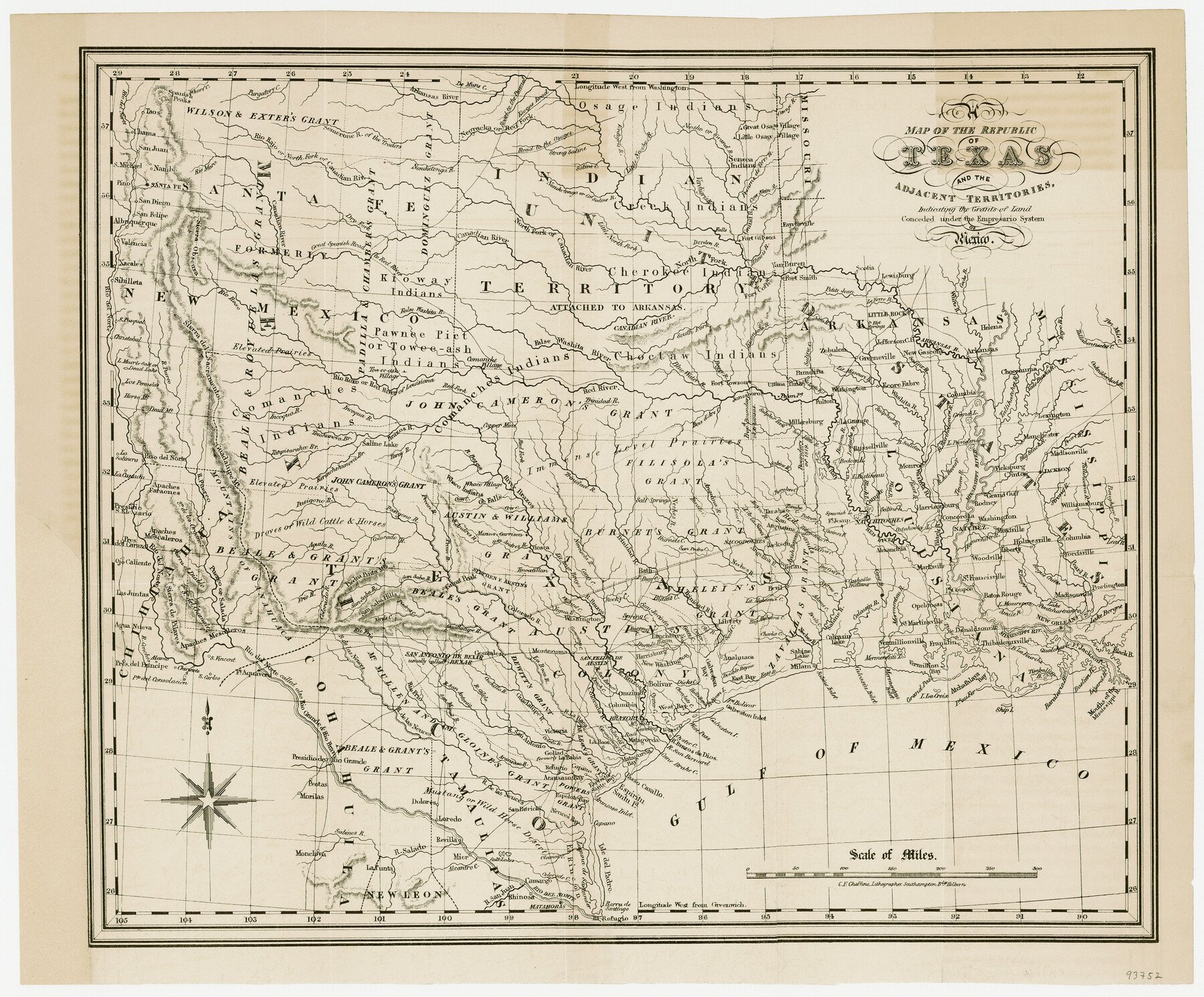
According to Espy, the only state-sanctioned execution that occurred while Texas was under Mexican rule involved Joseph Clayton who was hanged for murder in 1834. Career law enforcement officer and author of Death on the Gallows, West Gilbreath, however, located a news item from Nacogdoches that reported the legal hanging of three men (Samuel Looney, Barney Finch, and John Saunders) for murder also in 1834. Relatively few executions took place during the Texas Republic from 1836 through 1845, although the new nation’s austere penal code authorized death by hanging for the crimes of murder, rape, arson, robbery, burglary, treason, counterfeiting, horse theft, dueling that resulted in murder, and aiding the escape of condemned criminals awaiting execution. Courts were permitted to apply English common law to punish offenses not mentioned in statutes. Additionally, the code authorized the death penalty for certain crimes that harmed or threatened mail carriers. A second conviction for carrier robbery or a first-time mail robbery that threatened carriers “by the use of dangerous weapons” was punishable by death.
The Republic’s code contained numerous provisions that covered slavery-related offenses. Slave theft, illegal slave importation, and the intentional sale of free persons as slaves were capital offenses. Enslaved people and free persons of color were also subject to the death penalty for arson, murder, burglary, attempted insurrection, poisoning, and for assault with intent to kill or use of a weapon likely to produce death against White persons. Those convicted for attempted rape of a White female or for maiming White individuals could also be put to death. A historian of the Texas Republic estimated that no more than a dozen White criminals suffered the death penalty during 1836–45. Espy only identified six capitally-punished individuals during the Republic era—all White males convicted for murder, except for Henry Forbes, likely a free Black person. Espy and other researchers have concluded that Forbes, awaiting a retrial for murder, was hanged in Galveston in 1840 for “jail breaking,” possibly a common law offense recognized by the trial court. Additionally, West Gilbreath recorded four other hangings. On June 8, 1844, four men were hanged in Fannin County after they were tried and convicted for “murdering and robbery of three friendly Indians.”
Following annexation to the United States, the Texas legislature in 1848 authorized construction of a state penitentiary and adopted a penal code that retained the death penalty for White persons only for first degree murder, treason against the state, and the incitement of slave insurrections. Ten years later lawmakers ended capital punishment for White persons guilty of the latter offense. The new state code, including amendments added in 1858, subjected slaves to death for murder, treason, rape of a White woman, arson, and insurrection. “Robbery when committed upon a free white person…assault with intent to commit murder, rape or robbery upon a free white person,” attempted rape “upon a free white woman” as well as “assault with a deadly weapon upon a free white person” were also capital offenses under the state code. Free persons of color could receive death for the same offenses as slaves, as well as for “kidnapping a free white woman.”
Jesse Grinder, a slave, was possibly the first person executed after Texas joined the union in 1846. Like other capitally-punished individuals prior to 1861, he was convicted for murder and hanged. Enslaved women, Jane Elkins of Dallas and Lucy Dougherty of Galveston, both hanged for murder in 1853 and 1858 respectively, are believed to be the first females executed in Texas. From 1846 through 1860 Espy’s list indicates that four persons of Hispanic descent, eight African Americans, seven White non-Hispanic individuals, and two others of unknown race and ethnicity received the death penalty during this period. Other researchers have also identified at least five additional enslaved people executed by the state during the 1850s.
According to the Espy File, during the Civil War years (1862–65) the state executed at least twelve individuals. Five of these were hanged in Wise County for treason against the Confederate States government and three others for military desertion from the Confederate Army. The deserters, and an African American male convicted for attempted rape, died by firing squads.
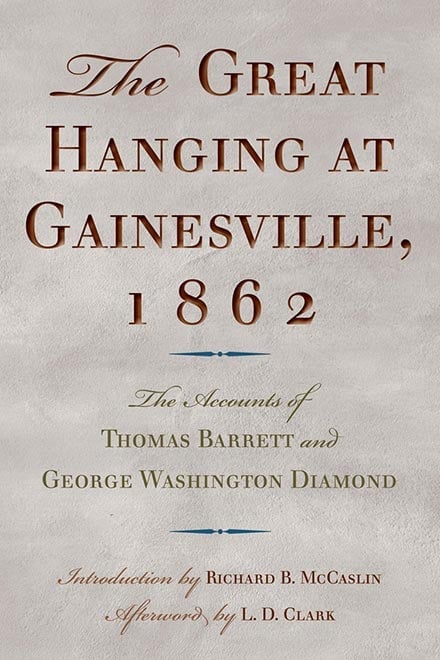
This era marked the only instances when Texas executed individuals for treason and by firing squad. Vigilante courts with at least tacit approval from Texas and Confederate authorities executed a far larger number than those listed by Espy. Perhaps the most well-known example was the hanging of forty Union sympathizers (two others were shot while trying to escape) near Gainesville in 1862 (see GREAT HANGING AT GAINESVILLE). Also hanged during the war years was Josefa “Chipita” Rodriguez. Convicted for robbery and murder in 1863, she is, according to available records, the only Hispanic female executed in the state.
The state conducted at least thirty executions during the Reconstruction era of 1867–76. Data from the Espy File indicates that twelve of these were African Americans, including two executed for rape. Six Caucasians were hanged for murder during this period, including eighty-year-old Mitchell Nelson who met his fate in 1875. Available records list him as the oldest person ever executed in Texas. Also hanged during these years were four persons of Hispanic descent. Espy’s files do not indicate the race or ethnicity for others executed during Reconstruction.
After the end of Reconstruction, the state legislature in 1879 revised the penal code to authorize the death penalty for all persons convicted of rape, regardless of their race. The revised code also added dueling that resulted in death to the list of capital offenses and continued the sanction for murder and treason, although no individuals were put to death for the latter offense after the Civil War, and no one apparently was ever executed for dueling. An 1883 law added robbery “when a firearm or other deadly weapon is used or exhibited in the commission of the offense.” This measure was included in the legislative code revisions of 1895, 1911, and 1925 along with the capital offenses from the 1879 code. While the use of capital punishment began to decline outside of the Southern states during the second half of the nineteenth century, Texas executed 221 offenders between 1865 and 1900 according to the Espy File. At least 127 or approximately 58 percent of those were former enslaved African Americans and/or their descendants; 23 or almost 11 percent were Hispanic origin, and 56 or slightly more than 25 percent were Caucasians. Two American Indians and thirteen individuals of unknown ethnicity composed the remainder of those executed during from 1865 to 1900 according to Espy’s records.
By the twentieth century, Texas, with its population of more than three million residents, was the largest state in the South. During the first two decades of the century, the state executed 123 convicted criminals, the largest number, 85 or approximately 69 percent of whom were African Americans. Hanged for murder in 1915 was fifteen-year-old Federico Sanchez, who, according to available records, is probably the youngest person ever executed in the state. During the years 1889–1918, approximately 335 individuals, 78 percent of whom were African Americans, also lost their lives to lynch mobs who were clearly acting outside the criminal justice system.
Many states, especially outside of the South, had ended public executions due to excessive public disorder which frequently surrounded these punishments. In Texas, capital prisoners were under the supervision of county governments and were executed by sheriffs or their deputies. The 1879 Code of Criminal Procedure of the State of Texas mandated that executions take place through gallows erected within county jail grounds; the code also limited execution witnesses to six county “freeholders,” six “physicians or surgeons,” and no more than four “justices of the peace.” Sheriffs in counties without proper jail facilities were required to “select some other place in the county” that “shall be as private as he can conveniently find, and publicity in the execution shall be avoided as far as practicable.” The procedural code also permitted sheriffs to appoint county citizens or militia forces to prevent mobs from entering the execution site for the purposes of either rescuing or lynching condemned criminals.
Despite the code’s mandates, large crowds frequently observed executions and impaired public order. In 1923 Governor Pat Neff signed into law a bill passed by the Thirty-eighth Texas Legislature that prohibited public executions and terminated county responsibility for executions. The new measure required that individuals awaiting execution be housed at the Huntsville Penitentiary prior to their execution date. Significantly, the new law, abolished hanging and, like an increasing number of states, adopted the electric chair as an ostensibly more humane death instrument and required that all executions be conducted privately at the penitentiary where condemned prisoners resided on what became known as “death row.” John W. Thomas of Bell County, the bill’s sponsor in the Texas Senate, had campaigned for office with a pledge to seek an end to public executions. Appalled by at least one public hanging that he had witnessed as well as accounts of other executions, including lynchings, Senator Thomas argued that confining capital convicts behind penitentiary walls would both make escapes difficult and protect them from lynch mobs while they were awaiting execution. Representative Thomas K. Irwin of Dallas, the bill’s sponsor in the Texas House of Representatives, also denounced the spectacle of public hangings which did little to promote respect for law and order. The last public execution in Texas occurred on August 31, 1923, when Nathan Lee, an African American, was hanged in the Brazoria County jail yard before a crowd of 150 people. Although several states had abolished capital punishment prior to 1923 and others seriously discussed the matter, Senator Thomas feared that “Abolishment of capital punishment” would result only in increased lawlessness and lynchings and thus “do more harm than good.”
When the state assumed control over capital convicts, records and data regarding the death penalty became more reliable for researchers than was the case when counties supervised executions. Huntsville Penitentiary officials oversaw the execution of 361 individuals by the state’s convict-constructed electric chair, nicknamed “Old Sparky,” between 1924 and 1964. The first five of these were African American males who were executed on the evening of February 8, 1924. During the ensuing forty years, 510 individuals received death sentences, although 139 or approximately 27 percent avoided the death chamber through state executive commutation and less than 2 percent through case reversal or dismissal (only eight individuals). Two capital convicts died while awaiting execution during this period. African Americans composed 229 or approximately 63 percent of those who perished in the electric chair, 107 or almost 30 percent were Anglo Americans, 24 or close to 7 percent were of Hispanic ancestry, and one was an American Indian. About 72 percent of those executed had received the death penalty for murder, roughly 25 percent for rape, and a small percentage for armed robbery. About 83 percent of those convicted for rape were African Americans. Between 1924 and 1980, five females were sentenced to death and none were executed. Eighty-two percent of African Americans placed on death row were eventually executed compared to 61 percent of the Anglos and 50 percent of those of Hispanic ancestry.
Executions in the United States reached an apex during the decade of the Great Depression when Texas executed 122 individuals; the peak years were twenty and eighteen in 1935 and 1938, respectively. Nationally 1,564 people were executed during the 1930s with New York, Ohio, and California executing the greatest numbers. During the next quarter century, however, the number of executions declined significantly across the United States, including Texas, which executed 183 individuals between 1940 and 1964. From 1930 to 1965 Texas executed the third greatest number in the country following Georgia and New York. When considering the rate of executions per 100,000 residents, though, Texas ranked below Georgia, South Carolina, North Carolina, Florida, and Alabama. By 1965, however, a national civil rights movement, a U.S. Supreme Court that encouraged death sentence appeals, and an apparent growing popular disdain for capital punishment, led to an unofficial national moratorium while states awaited the results of the National Association for the Advancement of Colored People (NAACP) Legal Defense Fund’s litigation efforts directed toward abolition. Joseph Johnson, an African American executed for murder on July 30, 1964, was the last Texan to die in the electric chair prior to a national pause in capital punishment. In 1965 the state moved death row from the Huntsville Walls Unit to the Ellis Unit, also at Huntsville, where it remained until a relocation in 1999 to the Polunsky Unit near Livingston, in Polk County. Women on death row are held at the O’Daniel Unit at Gatesville in Coryell County. Executions, however, continued to take place in Huntsville.
In June 1972 the Supreme Court of the United States found that the death penalty violated the Eighth Amendment’s “cruel and unusual” punishment clause. In Furman v. Georgia and two other cases, including Branch v. Texas, the court held that the arbitrary and capricious way the death penalty was administered by the various states and the national government made the punishment unconstitutional. The court, however, did not hold that the death penalty per se was unconstitutional—instead the decision focused upon the injustice of administration and allowed states to rewrite their capital statutes to conform to the court’s guidelines for constitutionality. Most states, including Texas, did so, and in Gregg v. Georgia the U.S. Supreme Court in 1976 allowed executions to resume. The court concluded that for the crime of murder, the death penalty did not violate Eighth Amendment “standards of decency” nor was the sanction “disproportionate to the severity of the crime.” The majority opinion held that deterrence of future behavior and retribution or “outrage at particularly offensive conduct” were legitimate goals for capital punishment.
Although reports slightly differ on the exact number, there were more than fifty Texas prisoners under death sentences at the time of the 1972 Furman decision. On July 31 of that year the Texas Board of Pardons and Paroles and Governor Preston Smith (1969–73) began commuting the sentences to comply with the temporary capital punishment ban. According to the Texas Department of Criminal Justice, Jimmy Chavez of Potter County received a reduced sentence of sixty years, and other death row inmates were given life sentences. While most of these commutations occurred during 1972, Smith’s successor, Governor Dolph Briscoe (1973–79), following board recommendations, commuted the small number of remaining death sentences to life in 1973.
Between 1964 and 1982 no executions occurred in Texas. State criminal courts continued to assess the death penalty during the 1972–76 Supreme Court moratorium and sent 423 individuals to death row between 1974 and 1988. The Texas legislature revised both the state penal code and the code of criminal procedure in 1973, and in 1976 the Supreme Court approved the new death penal provisions in Jurek v. Texas. The following year, the legislature changed the method of execution from electrocution to lethal injection. Texas resumed executions in 1982 as Charles Brooks became the first person in the United States to die by lethal injection through a “three drug cocktail” consisting of sodium thiopental, pancuronium bromide, and potassium chloride.
The revised 1973 Texas capital statute permitted the death penalty only for specific homicidal crimes where an offender “intentionally commits” murder in circumstances involving the murder of a peace officer or fireman performing their lawful duties; murder associated with kidnapping, burglary, robbery, forcible rape, or arson; murder for hire; murder while escaping or attempting to escape from a penal institution; or murder of a prison employee performing job tasks. Consistent with the Gregg requirements, capital defendants received a bifurcated trial that consisted of a trial guilty/not guilty stage and a separate punishment phase. During the latter phase, jurors were required to determine whether the murder was deliberate, whether the defendant would commit future acts of violence, and whether the defendant’s conduct was unreasonable in response to the deceased’s provocation. Subsequent statutory revisions provided the death penalty for individuals who committed murder while incarcerated for certain aggravated offenses and for those who committed multiple murders. Murder of a child under the age of fifteen and the retaliatory murder of a judge were also added to Texas’s capital statutes. The Code of Criminal Procedure mandated automatic appeals directly from the trial court to the Texas Court of Criminal Appeals for those sentenced to death.
While trial courts and juries would sentence individuals to death, many states, such as California with the nation’s largest death row, proved reluctant to implement the death penalty. The vast majority of the nearly 699 executions between 1977 and 1999, occurred in Southern states, where capital punishment remained popular. From 1982 through 1999 Texas became the unchallenged national leader with 195, or almost a third of all executions. This statistic led historian Lawrence Friedman to quip: “This angel of death wore cowboy boots and a Texas hat.” Virginia, with seventy-one executions and Florida with forty-two were a distant second and third nationally.
From 1972 through 2023, approximately 1,118 individuals received death sentences, and 586 executions occurred in Texas by means of lethal injection (in July 2012 Texas replaced the three-drug cocktail protocol with a single pentobarbital drug). African Americans represented 209 of those executed, while White non-Hispanic individuals were 261 of those executed, and 111 executed were Hispanic. Three Asian individuals and two persons of American Indian ancestry made up the remainder of those executed. Six women, from the female death row at the Patrick L. O’Daniel Unit (formerly known as the Mountain View Unit) in Gatesville, were among those. Karla Faye Tucker in 1998 was the first Texas woman to die by lethal injection as well as the first female executed in the state since 1863.
Courts have historically convicted and executed African Americans in disproportion to their representation in the state’s total population. Researchers have found that the race of a capital defendant’s victim, is more determinative of the case outcome than the race of the defendant, as cases involving White victims have resulted in death penalty verdicts more frequently than those where victims were persons of color. Other investigators have observed, however, that at least equally as important as race is the nature of the crime. Considering death penalty eligible homicides, some researchers have determined that Texas White and Black defendants, at least during the 1990s, were convicted on an almost equal basis—and that by 2003 capital cases involved White victims less than 50 percent of the time. Hispanic and Asian ethnic group capital offenders received the death penalty at slightly lower rates than Blacks or Whites during these same years.
Investigators also have suggested the existence of a capital punishment geographic bias within Texas. Most death sentences have come from only a few of Texas’s 254 counties. While more than one-half of Texas counties have never sent a prisoner to death row, Harris, Dallas, Bexar, and Tarrant counties have ranked among the top five in the nation since the Gregg decision. As of 2024 Harris, known by critics as the “capital of capital punishment” accounted for 135 executions, a number larger than any single state except Texas itself. Dallas County, with sixty-five executions, ranks a distant second behind Harris.
Students of capital punishment have offered several explanations for the Lone Star State’s willingness to assess and implement the death penalty, especially after the Gregg decision. Texas had always been among the nation’s leaders for executions, and the resumption of executions in 1982 represented a cultural continuity built solidly on the state’s historic capital punishment foundation, including a “frontier justice” or “wild west” ethos. A related explanation stressed the state’s legacy of slavery and racism as well as a historical culture of exclusion that justified attacks and pogroms against ethnic minority populations. Texas was also among the nation’s leading lynching states—as lynchings subsided, this infamous practice was replaced, some argue, by rapid executions, or “legal lynchings,” epitomized by perfunctory trials where capital defendants received shoddy legal defense. Many scholars have argued that the disproportionate conviction and execution of predominantly African American defendants emanated from a new political culture whereby “law and order” became a coded theme for persistent racism following the 1960s civil rights movement. Other observers suggest that approval of capital punishment by numerous evangelical religious denominations also served as a source of public support for the death penalty. Texas politicians, including both Republican and Democratic gubernatorial candidates, campaigned in favor of capital punishment during the 1980s and 1990s.
A study of forty-seven Texas death row inmates whose sentences were commuted to life or as a result of the 1972 Furman ruling, determined that thirty-one or 66 percent, were eventually released to the community either through parole, sentence discharge, pardon, or successful appeal. Only five committed new felonies—nonetheless the death penalty remained a critical component of criminal justice-related politics for the remainder of the twentieth century. One of the Furman-related parolees, convicted murderer, Kenneth McDuff, committed several highly-publicized murders following his release in 1989. McDuff eventually died by lethal injection, but the negative publicity surrounding his release inspired the state legislature to tighten parole eligibility laws for those convicted of violent crimes and raised the penalty for non-capital homicide. In addition, state voters approved a one-billion-dollar bond issue that expanded the number of prison beds from 38,000 to 40,000. Several observers believe that McDuff’s release and subsequent behavior contributed to the state’s expanded utilization of capital punishment during the 1990s, as McDuff became “the death penalty poster boy.”
Death penalty critics have also noted the existence of certain procedural and constitutional features associated with Texas law that have arguably contributed to the number of executions. The lack of a statewide public defender system as well as the absence of a life without parole law, until 2005, and a “law of parties” doctrine which allows the prosecution of accomplices who did not actually commit felony murder are among the most controversial features and procedures that death penalty opponents have observed. In addition, Texas law did not permit jurors to directly consider mitigating circumstances such as mental illness or youth, until 1991. A 1995 statute reduced the appeals time between conviction and execution and thus expedited executions. Other critics have attacked the quality of trial and appellate judges who receive their positions through elections.
Since 1936 a state constitutional amendment has prevented governors from commuting sentences or issuing pardons or paroles without approval from a majority of the Texas Board of Pardons and Paroles members. On their own volition, governors may only grant one thirty-day reprieve. This provision stemmed from negative political reactions to what many considered to have been corrupt and/or overly compassionate pardon policies of Governors James and Miriam Ferguson, especially during the latter’s 1933–35 administration. While Texas governors have no powers to prevent an execution approved by the parole board, they may, nonetheless, refuse to grant clemency, even if the board favors a commutation. Thus, Texas governors, unlike many of those in other states, can more easily facilitate than prevent a capital sanction. Since 1984 all board members have been appointed by the governor and presumably share similar punishment philosophies. Gubernatorial powers to delay executions are further weakened by state law that requires trial judges, rather than governors, to set execution dates. Governors George W. Bush (1995–2000) and Rick Perry (2001–14) oversaw 154 and 279 executions respectively during their administrations, the most of any governors in the nation’s history.
During the early part of the twenty-first century, however, certain national developments appear to have altered the political landscape. Texas’s forty executions in 2000 were the largest in the state’s history, but the numbers declined during the next two decades. Beginning with 2016 total annual executions fell to less than ten. Only in 2018 (with thirteen executions) did those numbers exceed single digits. Five individuals were executed in 2022, including Carl Wayne Buntion, who, at age seventy-eight, was the oldest person executed by lethal injection in the state’s history. Eight individuals died by lethal injection in 2023. While death row held 180 inmates at the conclusion of 2023, the number of capital sentences from Texas courts has declined in recent years from a high of forty-eight in 1999 to single digit numbers in all years but one after 2009. Only two new death row prisoners arrived in 2022 and three in 2023. However, Texas has remained the national leader in executions, and the death penalty has continued to fall disproportionately upon persons of color. Harris County remained the “capital of capital punishment” at the end of 2023, with sixty-seven death row inmates, far more than the second and third place counties, Dallas with fourteen and Tarrant with eleven.
Although some observers have suggested that national scrutiny of Texas capital punishment practices that arose when Governor George W. Bush campaigned for president in 2000 was a significant contributing factor, probably the most important explanation for the recent decline pertains to national publicity, influenced in large measure by university-based “Innocence Projects” that date to the early 1990s. By the early years of the twenty-first century, an increasing number of investigations reported the innocence of offenders who were initially sentenced to death through false witness testimony, official misconduct by law enforcement and prosecutors, and mistaken eyewitness identification. In a few highly publicized instances, DNA evidence analysis contributed to the exoneration of capital convicts. The possibility that an innocent defendant might be put to death contributed significantly to public skepticism toward capital punishment as states reduced their capital convictions. Eighteen Texas death row prisoners, some whose convictions date as early as 1977, were exonerated between 1987 and 2024, three of those through DNA evidence analysis. Texas policy makers, like those in other states, responded to popular concerns regarding potentially erroneous or wrongful convictions.
The Texas legislature in 2001 passed the Fair Defense Act that created the Texas Task Force on Indigent Defense (later known as the Texas Indigent Defense Commission [TIDC]) designed to strengthen criminal defense practices in part by encouraging and assisting counties with the establishment of public defender offices. By 2020 there were thirty-six county and regional public defender offices, including a Regional Public Defender for Capital Cases Office. More important, perhaps, was the 2005 enactment of a life without parole statute that courts have increasingly assessed since its enactment. Since 2005 the number of death row inmates has declined from 446 to 180 in 2023. By the end of 2007 the number of prisoners serving life without parole stood at 37, and by 2014 that number was 96. The number rose to more than 1,500 by 2023. Legal scholars also note the importance of political changes in Harris County that resulted in fewer death sentences during the twenty-first century. After the year 2000, the number of Harris County death sentences plummeted from sixty-six during 1992–96 to twelve during 2005–09.
Texas’s felony murder policies aligned with developments elsewhere as almost all states were increasingly replacing capital punishment with alternative life without parole sentences by 2020. Death penalty opponents maintain that a capital sentence costs as much as three times that of a life without parole sanction in Texas. Lengthy death penalty trial and appeal procedures that include such items as attorney and expert witness costs, as well as incarceration expenses for inmates who may reside on death row for an average of twenty years or more while awaiting final appeals, make capital punishment an expensive proposition for taxpayers according to critics. Death penalty opponents also contend that there is no proof that capital punishment serves as an effective deterrent to violent crime. The sanction’s historically disproportionate impact upon people of color and those without financial resources continues to serve as an argument against capital punishment. Nonetheless, public opinion polls in Texas show that a majority of those surveyed support the death penalty.
At the end of 2023 Texas remained one of twenty-seven states, along with the federal government, that retained the death penalty, with the nation’s third largest death row behind California and Florida. California and several other states, though, had paused executions, and most of the remaining death penalty retentionist states, especially outside the South, rarely sentenced individuals to death and only occasionally conducted executions. The federal government, which has only executed fifty individuals since 1927, led the nation with ten executions during 2020 and completed three more in 2021. From 1977 through 2023, a total of 1,582 executions occurred within the United States. As many death penalty opponents have noted, the nation remained among a 30 percent minority of countries that retained the death penalty. At least 112 countries have abolished the death penalty for all crimes. Only China, Iran, Saudi Arabia, and Egypt conducted more executions in 2022 than the United States. Texas, however, remained the “Death Penalty Capital” of the United States by conducting nearly one-third of all executions within the nation during 2022–23.
Bibliography:
Michael Ariens, Lone Star Law: A Legal History of Texas (Lubbock: Texas Tech University Press, 2011). Frank R. Baumgartner, Suzanna L. DeBoef, Amber E. Boydstun, The Decline of the Death Penalty and the Discovery of Innocence (Cambridge: Cambridge University Press, 2008). Randolph B. Campbell, ed., compiled by William S. Pugsley and Marilyn P. Duncan, The Laws of Slavery in Texas (Austin: University of Texas Press, 2010). Maurice Chammah, Let the Lord Sort Them: The Rise and Fall of the Death Penalty (New York: Crown, 2021). Charles R. Cutter, The Legal Culture of Northern New Spain: 1700–1810 (Alburquerque: University of New Mexico Press, 1995). Death Penalty Information Center (https://deathpenaltyinfo.org/), accessed May 20, 2024. Espy File, “Executions in the U.S. 1608–2022: The Espy File,” Death Penalty Information Center (https://deathpenaltyinfo.org/executions/executions-overview/executions-in-the-u-s-1608-2002-the-espy-file), accessed September 10, 2024. Hans Peter Nielsen Gammel, comp., Laws of Texas, 1822–1897 (10 vols., Austin: Gammel, 1898). David Garland, Peculiar Institution: America’s Death Penalty in an Age of Abolition (Cambridge, Massachusetts: The Belknap Press of Harvard University Press, 2010). West Gilbreath, Death on the Gallows: The Encyclopedia of Legal Hangings in Texas (Fort Worth: Wild Horse Press, 2017). James W. Marquart, Sheldon Ekland-Olson, Jonathan R. Sorensen, The Rope, the Chair, and the Needle: Capital Punishment in Texas, 1923–1990 (Austin: University of Texas Press, 1994). Ruth Massingill and Ardyth Broadrick Sohn, Prison City: Life with the Death Penalty in Huntsville, Texas (New York, Peter Lang Publishing, Inc., 2007). Richard B. McCaslin, Tainted Breeze: The Great Hanging at Gainesville, Texas 1862 (Baton Rouge: Louisiana State University Press, 1994). David McCord, “What's Messing with Texas Death Sentences?” Texas Tech Law Review 43 (2011). David M. Oshinksy, Capital Punishment on Trial: Furman v. Georgia and the Death Penalty in Modern America (Lawrence Kansas: University Press of Kansas, 2010). Don Reid with John Gurwell, Have a Seat, Please (Huntsville, Texas: Texas Review Press, 2001). Jon Sorensen and Rocky Leann Pilgrim, Lethal Injection: Capital Punishment in Texas during the Modern Era (Austin: University of Texas Press, 2006). Texas Coalition to Abolish the Death Penalty: Reports (https://tcadp.org/reports/), accessed March 7, 2024. Texas State Law Library: Historical Texas Statutes (https://www.sll.texas.gov/library-resources/collections/historical-texas-statutes/), accessed May 17, 2024. Hannah Thurston, Prisons and Punishment in Texas: Culture, History and Museological Representation (London: Palgrave Macmillan, 2016).
Categories:
Time Periods:
Places:
The following, adapted from the Chicago Manual of Style, 15th edition, is the preferred citation for this entry.
Paul M. Lucko, “Capital Punishment in Texas,” Handbook of Texas Online, accessed March 09, 2026, https://www.tshaonline.org/handbook/entries/capital-punishment-in-texas.
Published by the Texas State Historical Association.
TID:
JIC01
All copyrighted materials included within the Handbook of Texas Online are in accordance with Title 17 U.S.C. Section 107 related to Copyright and “Fair Use” for Non-Profit educational institutions, which permits the Texas State Historical Association (TSHA), to utilize copyrighted materials to further scholarship, education, and inform the public. The TSHA makes every effort to conform to the principles of fair use and to comply with copyright law.
For more information go to: http://www.law.cornell.edu/uscode/17/107.shtml
If you wish to use copyrighted material from this site for purposes of your own that go beyond fair use, you must obtain permission from the copyright owner.
- November 26, 2024
- June 26, 2025
This entry belongs to the following special projects: