Cooper Lake: History, Construction, and Recreational Opportunities
Published: September 20, 2006
Updated: September 11, 2019
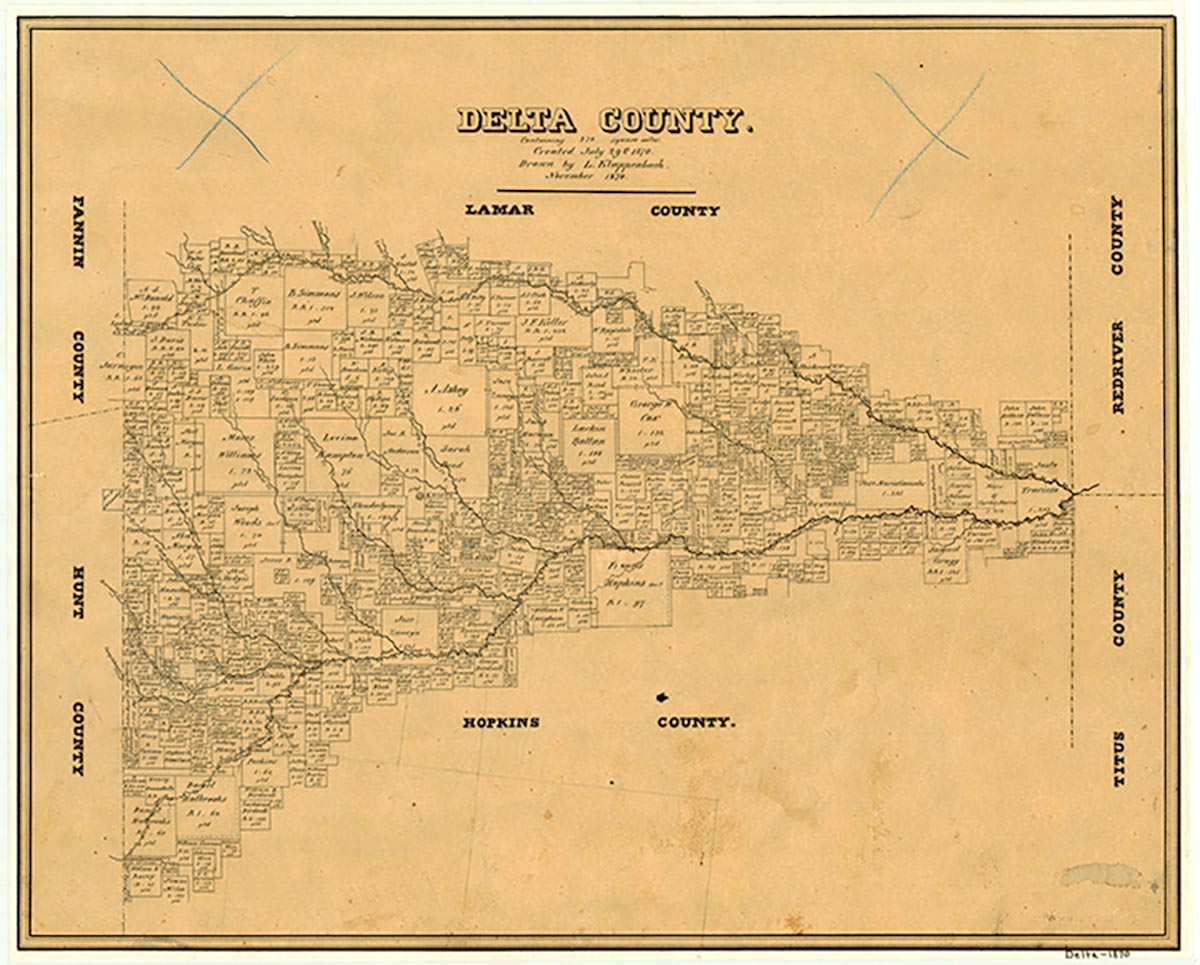
Cooper Lake is on the South Sulphur River on the border of Delta and Hopkins counties approximately three miles south of Cooper and twelve miles northwest of Sulphur Springs. Area residents, led by local landowners Grover Pickering and Quentin Miller, first proposed the construction of a reservoir for the purposes of flood control and water storage in the late 1930s. In 1948 Congressman Wright Patman requested a feasibility study for a dam and reservoir on the South Sulphur River, and the United States Army Corps of Engineers published a favorable report in 1950. In the early 1950s the cities of Sulphur Springs and Commerce, along with Delta County, signed on with the project, and the Cooper Dam bill was passed and signed in 1955.
The reservoir project hit the first of a series of stumbling blocks in 1957, when the Corps of Engineers announced that the damsite would need to be moved six miles downstream. Throughout the 1960s construction was delayed as more interests—the North Texas Municipal Water District and the City of Irving—came to the bargaining table, and various factions argued over water storage rights, pollution control measures, allocations of water storage permits, and lake capacities. The contract for Cooper Dam and Reservoir was finally signed on March 29, 1968, and land acquisition which had begun in the early 1960s resumed. The project, however, suffered another setback in 1971 when the Texas Committee on Natural Resources, a non-profit trust, filed suit against the Corps of Engineers for failing to file an environmental impact statement. Government agencies debated issues of environmental studies and mitigation for the next thirteen years, until 1984, when an appeals court lifted an injunction on construction.
Luhr Brothers of Columbia, Illinois, began construction of an earthfill dam in 1987 and fulfilled the $41.3 million contract in 1991. Formal dedication occurred on September 28, 1991. The earthfill dam is 28,070 feet long with a maximum height of seventy-nine feet. The reservoir, also named Jim Chapman Lake after a local congressman, covers more than 22,000 acres and carries a maximum capacity of 441,200 acre-feet. Cooper Lake State Park, located on both the northern and southern shores of the lake, offers recreational opportunities. More than 9,000 additional acres bordering the lake serve as a wildlife management area.
Bibliography:
Laurie E. Jasinski, "The Harvest, the Hunt, and the Hoedown: A History of Cooper Lake State Park" (unpublished report, Texas Parks and Wildlife Department, Cultural Resources Program, Austin, 2004).
The following, adapted from the Chicago Manual of Style, 15th edition, is the preferred citation for this entry.
Laurie E. Jasinski, “Cooper Lake,” Handbook of Texas Online, accessed March 09, 2026, https://www.tshaonline.org/handbook/entries/cooper-lake.
Published by the Texas State Historical Association.
TID:
ROC33
- September 20, 2006
- September 11, 2019