Jerry Grote: Major League Baseball Catcher (1942–2024)
By: Frank Jackson
Published: February 22, 2026
Updated: February 23, 2026
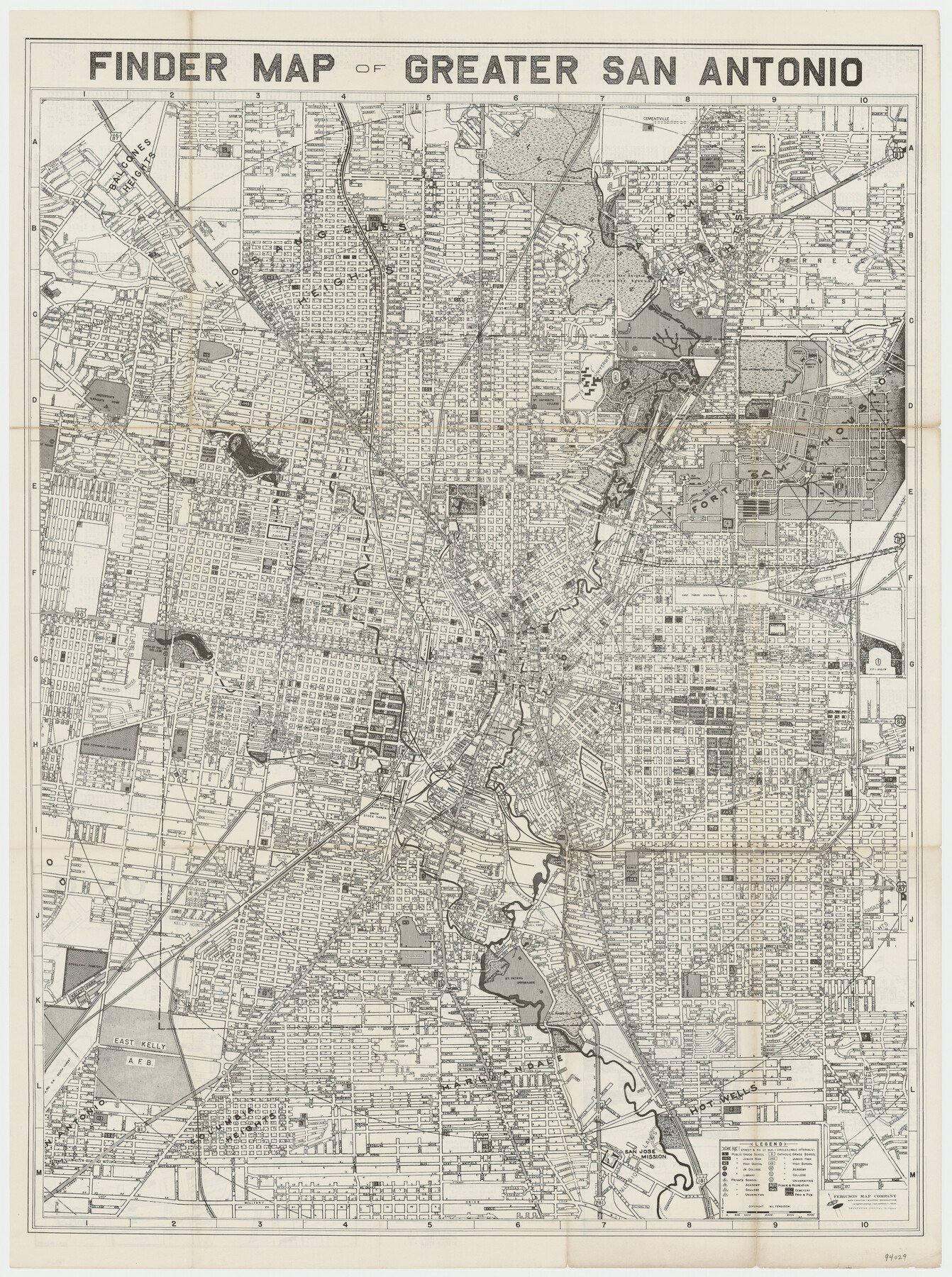
Gerald Wayne “Jerry” Grote, Major League Baseball catcher, was born in San Antonio, Texas, on October 6, 1942. Grote was the eldest of three children (with sisters Iris and Debbie) born to Clarence Herman and Leila Ann (Rittimann) Grote. In 1961 he graduated from San Antonio’s Douglas MacArthur High School, where he played mostly as a pitcher, but also as a catcher and infielder, on the school’s baseball team. He also participated in track and field events and ran cross-country.
Houston Colt .45s and Affiliates
Heeding the advice of his father, Grote turned down an offer to sign with the Houston Colt .45s, whose inaugural season commenced in 1962, and instead enrolled at nearby Trinity University. After hitting .413 in his freshman year with the Trinity Tigers, however, he was signed by Colts’ scout John “Red” Murff. Three years later Murff, then in the employ of the New York Mets, signed one of Grote’s future battery mates, Nolan Ryan from Alvin High School in Brazoria County.
For the 1963 season the Colts assigned Grote to the San Antonio Bullets of the Double-A Texas League. His power statistics during his first professional season (fourteen home runs and sixty-two runs batted in) were the best of his career. The Bullets went on to win the Texas League pennant, after which the Colts brought Grote to Houston to finish the season.
On September 27, just six days after he made his major league debut, Grote not only got his first major league hit, but earned a place in baseball history as the catcher on the Colts’ all-rookie starting lineup, the first and last of its kind in Major League Baseball history. The result was a 10–3 loss to the Mets. Though all the starters were unknowns at the time, Jimmy Wynn, Sonny Jackson, and Rusty Staub, as well as Grote, would all have lengthy big-league careers, and Joe Morgan would be elected to the National Baseball Hall of Fame.
Grote spent the entire 1964 season in Houston. It was a largely forgettable season (the Colts finished 66–96), but on April 23, Grote was the batterymate for Ken Johnson, the first pitcher to throw a no-hit game and lose after the Cincinnati Reds eked out an unearned run in the ninth inning. Platooning with John Bateman, another Murff discovery, at the catching position in 1964, Grote (with 298 at bats) hit a mere .181, indicating he was overmatched by major league pitching, and so in 1965 he was farmed out to Houston’s Triple-A affiliate, the Oklahoma City 89ers, who went on to win the Pacific Coast League championship.
Trade to New York Mets
Grote enjoyed a good season with Oklahoma City in 1965, however, he never returned to the Houston team (known as the Astros after moving into the Astrodome in 1965). Rather, on October 19, 1965, he was traded to the Mets. The trade was a boon to his career. He spent twelve seasons with the Mets. It also proved to be one of the best deals the Mets ever made. Grote was traded for pitcher Tom Parsons, who never played for the Astros and spent the rest of his career in the minors.
When Grote began playing with the Mets in 1966, the team was at the bottom of the league. Like the Colts/Astros, they were a 1962 National League expansion team, but while both franchises had struggled in their early years, the Mets had consistently finished last. After setting a record for most losses with 120 in 1962, they eclipsed 100 losses the next three years. In Grote’s first year with the Mets, however, they lost a “mere” ninety-five games and finished ninth, surpassing the Chicago Cubs. The Mets’ September 18 doubleheader at the Astrodome was notable, as it marked Grote’s first collaboration with batterymate Nolan Ryan, who was making his first major league start..
Offensively, Grote was middling in his first two seasons with the Mets, but his catching skills (calling pitches, throwing out base runners, etc.) kept him in the lineup. In 1968, however, he hit better than .300 by mid-season, which was good enough to get him elected the National League’s starting catcher at the All-Star Game at the Astrodome. At season’s end he had just one passed ball, an extraordinary statistic considering he had caught more than 1,000 innings.
The Miracle Mets and the 1969 World Series
Offensively, the 1969 season was a typical year for Grote—his .252 batting average was a match for his career average—but it was anything but typical for the Mets. In 1968 they had finished with their best record yet (73–89), which was good for no better than a ninth place finish. The 1969 “Miracle Mets” astonished the baseball world by greatly exceeding expectations.
Though the Mets were nine games behind the Chicago Cubs in mid-August, they went on to win 100 games and finish first in the National League East. Then they swept the Atlanta Braves in the National League Championship Series (the 1969 season was the first year of divisional play) and defeated the Baltimore Orioles, four games to one, in the World Series. Grote caught every inning of the post-season. With this season Grote completed an unusual trifecta, as he had been a regular on championship teams at the Double-A, Triple-A, and major league level in the 1960s.
Grote played a key role in the rise of the 1969 Mets, whose strength was pitching. As the team’s first-string catcher, he called games for two future Hall-of-Famers (Nolan Ryan and Tom Seaver, the latter of whom led the league with twenty-five wins in 1969), as well as Jerry Koosman, and reliever Tug McGraw, both of whom went on to nineteen-year careers in the major leagues.
The 1970s and Three Further World Series Appearances
The Mets backslid in the next few seasons. From 1970 through 1972 they finished no better than third in the National League East. A highlight for Grote was his appearance on the cover of the June 21, 1971, issue of Sports Illustrated.
The Mets’ appearance in the 1973 World Series was similarly miraculous. With a record of just .509 (82–79) in the weak National League East division, they dispatched the highly-favored Cincinnati Reds in the National League Championship Series. Again, Grote caught every inning of the post-season, which included a seven-game loss to the Oakland Athletics in the World Series.
In 1974 Grote was named as a reserve on the National League All-Star team. In 1975 he achieved his career-best batting average (.295) and led all National League catchers with a fielding percentage of .995. He remained a Mets mainstay until 1977. At age thirty-four he was traded to the Los Angeles Dodgers, with whom he participated in the 1977 and 1978 World Series (both against the New York Yankees), albeit in a backup role to Steve Yeager.
End of Playing Career and Other Ventures
Having turned thirty-six during the 1978 post-season, Grote retired. However, after his first wife, Sharon (Billa) Grote, whom he had married in 1963, filed for divorce in late 1980, he signed with the Kansas City Royals, who had just lost catcher Darrell Porter. Despite his long layoff, Grote hit .304 in limited duty (sixty-two plate appearances) in 1981. On September 1, when the Royals could expand their roster by calling up minor leaguers, they released Grote. A week later he was signed by the Los Angeles Dodgers. Though the Dodgers advanced to the World Series, Grote was ineligible, as he had joined the team too late in the season to qualify for the post-season roster. The Dodgers released him during the post-season, thus ending his major league playing career. At the conclusion of the 1981 season, his career fielding percentage of .991 ranked him eighth among all catchers in Major League Baseball history. He remains the Mets’ all-time leader in games played by a catcher (1,176).
In 1982, following Grote’s second retirement, he married Toni Wilcox. The union was dissolved a little more than a year later. In 1985 Grote split the season and managed the Birmingham and Lakeland minor league affiliates of the Detroit Tigers. At age forty-two he activated himself for one game with Birmingham. Yet that was not the end of his playing career. In the 1989–90 winter season, at age forty-seven, he played with the St. Lucie Legends of the Senior Professional Baseball Association, a short-lived (two seasons) Florida-based league that was comprised of middle-aged professional baseball veterans.
During Grote’s retirement, he remained in the San Antonio area and managed a meat market and a cattle ranch, among other endeavors. In August 1983 he was indicted for selling cattle that did not belong to him. The charges were dropped in May 1984. In 2011 Grote, in a sense, finally joined the Astros, as he served as color commentator on radio broadcasts for the Round Rock Express, the Astros’ affiliate in the Pacific Coast League. He continued through the 2011 season after the franchise affiliation changed to the Texas Rangers.
Death and Tributes
Jerry Grote died at the Texas Cardiac Arrhythmia Institute in Austin on April 7, 2024, due to respiratory failure after undergoing a heart operation. He was buried in the Grote Family Cemetery in Selma, Texas. He was survived by his third wife, Cheryl (Luedecke) Grote, whom he married in 1997, as well as Sandra, Jeffrey, and Jennifer Grote, his children by his first wife.
Described as a “rifle-armed, tough-as-nails Texan” in his obituary on MLB.com, Grote was often at loggerheads not just with opponents but sometimes teammates. Words like “surly” and “fiery” were often used to describe his personality. Grote was named to the Texas Baseball Hall of Fame in 1991, the New York Mets Hall of Fame in 1992, the San Antonio Sports Hall of Fame in 1998, and the Trinity University Athletics Hall of Fame in 2011.
Perhaps the ultimate tribute to Grote came from two Hall of Famers who played against him. “For quickness in getting rid of the ball and accuracy, I’d have to pick Grote,” said Lou Brock, who stole 938 bases, mostly while playing for the St. Louis Cardinals. He considered Grote “the toughest catcher in the league to steal on.” A fellow catcher, Johnny Bench, opined that if he and Grote were on the same team, “I’d be playing third base.” As Bench was a Gold Glove catcher for ten consecutive seasons (1968–77), the comment was high praise.
Bibliography:
Baseball-Almanac.com: Jerry Grote (https://www.baseball-almanac.com/players/player.php?p=groteje01), accessed February 11, 2026. Baseball-Reference.com: Jerry Grote (https://www.baseball-reference.com/players/g/groteje01.shtml), accessed February 11, 2026. Len Hochberg, “Jerry Grote, Catcher on ’69 Amazin’ Mets, Dies at 81,” MLB.com (https://www.mlb.com/news/jerry-grote-catcher-on-69-amazin-mets-dies-at-81), accessed February 11, 2026. Newsday (New York), November 27, 1983. Joseph Wancho, “Jerry Grote,” SABR Baseball Biography Project, Society for American Baseball Research (https://sabr.org/bioproj/person/jerry-grote/), accessed February 11, 2026.
Categories:
Time Periods:
The following, adapted from the Chicago Manual of Style, 15th edition, is the preferred citation for this entry.
Frank Jackson, “Grote, Gerald Wayne [Jerry],” Handbook of Texas Online, accessed March 09, 2026, https://www.tshaonline.org/handbook/entries/grote-gerald-wayne-jerry.
Published by the Texas State Historical Association.
TID:
FGRBU
All copyrighted materials included within the Handbook of Texas Online are in accordance with Title 17 U.S.C. Section 107 related to Copyright and “Fair Use” for Non-Profit educational institutions, which permits the Texas State Historical Association (TSHA), to utilize copyrighted materials to further scholarship, education, and inform the public. The TSHA makes every effort to conform to the principles of fair use and to comply with copyright law.
For more information go to: http://www.law.cornell.edu/uscode/17/107.shtml
If you wish to use copyrighted material from this site for purposes of your own that go beyond fair use, you must obtain permission from the copyright owner.
- February 22, 2026
- February 23, 2026
This entry belongs to the following special projects: