George Gibson Huntt: A Legacy of Military Service (1835–1914)
By: William V. Scott
Published: August 10, 2022
Updated: August 10, 2022
George Gibson Huntt, United States Army officer, was born on September 1, 1835, in Washington, D.C., to Henry Huntt and Anna Maria (Ringgold) Huntt. His father served as hospital surgeon at the United States Hospital at Burlington, Vermont, in the latter part of the War of 1812. Henry Huntt also served as primary physician during the presidencies of James Monroe, John Quincy Adams, and Andrew Jackson and presided over the board of health of the District of Columbia.
On the 1860 census, George G. Huntt was listed in the service of the U.S. Navy in Washington, D.C., and on March 27, 1861, he was commissioned in the U. S. Army as a second lieutenant, First U.S. Cavalry, stationed at Fort Washita, in the Choctaw Nation of Indian Territory. On May 2, 1861, he was promoted to the rank of first lieutenant. Huntt was soon transferred to the Fourth U.S. Cavalry, when the regiments were redesignated on August 3, 1861. On September 14, 1861, he took the position of adjutant of the new regiment and served from September 14, 1861, to July 17, 1862; he then was promoted to captain. Throughout 1862 and 1863 Huntt was stationed in a northern locale of Harrisburg, Pennsylvania, for health reasons.
After the Civil War, the Fourth U.S. Cavalry was sent south, and from December 1866 through July 1867, Captain Huntt commanded Company H, as a part of a detachment at Camp Verde, Texas. In July 1867 Huntt and reinforcements from Camp Verde supported Lt. Col. Eugene B. Beaumont, Maj. Michael J. Kelly, and 331 men at Fort Chadbourne. Upon arriving from Camp Verde, Huntt commanded the company and post at Fort Chadbourne from July 18 through November 1867. In August, steam sawmills were sent from Fort Chadbourne to the North Concho River, to the presumed location of a new post. In December 1867 Huntt established a “permanent Camp” on the main fork of the Rio Concho to be designated “Camp Hatch on the Rio Concho, Texas.” He commanded Company H, Fourth U.S. Cavalry, from Fort Chadbourne and the new post on December 4, 1867. In January 1868, as the post's first commanding officer, Captain Huntt named the post Camp Hatch after the commander of his regiment, Maj. John Porter Hatch. In early February 1868 the post’s name was changed to Camp Kelly, in honor of captain and brevet major Michael J. Kelly, who had recently deceased of typhoid fever at Fort Chadbourne. Huntt described Kelly as the first federal officer to reoccupy Fort Chadbourne since the Federal evacuation of Texas following Gen. David Twiggs’s surrender in 1861. The new post was subsequently named Fort Concho in March 1868.
During the first couple of months, Capt. George Huntt oversaw construction of the newly-named Fort Concho. He served there from March through August 1868. During this time, in late April 1868, he was relieved of command of Company H and the post when he was assigned to detached service to serve as a witness for a court martial in San Antonio. He rejoined the post and assumed command on May 18, 1868. On May 25, 1868, Huntt was assigned again to detached service, commanding Company H, and picket patrol at Fort Chadbourne. On June 18, 1868, he returned to duty at Fort Concho through August 1868, when he was assigned to detached service, in command of the company at Camp Charlotte.
In September 1868 Huntt was transferred to Helena, Texas, on reconstruction duty but soon left for General Mounted Recruiting Service at Carlisle, Pennsylvania. On April 15, 1869, George Gibson Huntt married Mary Alice Hickok, daughter of William Orville and Caroline Louise (Hutter) Hickok, at the Market Square Presbyterian Church in Harrisburg, Pennsylvania. They had four children, but only two survived to adulthood.
In January 1870 Huntt left on detached service to serve as a witness for a court martial at Fort Brown in Brownsville. In March 1870 he assumed command of company H at the post at Austin, Texas, until he was promoted to major of the First U.S. Cavalry and transferred to regimental duty in the Military District of the Pacific. Upon his promotion, he relinquished command at Austin officially on May 28, 1870.
On December 13, 1872, Huntt was assigned on detached duty as the distribution officer of the Freedmen's Branch, Adjutant General's Office, until relieved of this position October 22, 1879. He was attached to the garrison of Fort Walla Walla (present-day Washington state) on June 19, 1877, but never joined the post. Later in his assignment to the Freedmen’s Bureau, he served in Washington, D.C. Huntt was recorded in a Washington city directory in 1878 and 1879.
Major Huntt was again transferred west in November 1879, where he joined the garrison at Fort Colville (present-day Washington state) and assumed command of the post. With the exception of a one-year leave from military duties, he spent the next several years in the Pacific Northwest, including duty at Boise Barracks, Idaho; Fort Klamath, Oregon; and Fort Canby, Washington Territory. During his command at Fort Ellis, Montana Territory, where he served from July 1884 through October 1886, his wife Mary Alice died on October 27, 1885.
On April 21, 1887, Huntt was promoted to lieutenant colonel, Tenth U.S. Cavalry. In joining the Tenth Cavalry, he was assigned to the garrison at Fort Apache in May 1887. The regiment was soon transferred to Fort Apache, Arizona Territory, where he commanded the regiment and the post from October 1888 through August 1890. Lieutenant Colonel Huntt briefly left the post in November 1890 as he was assigned to detached service as a member of the Examining Board, New York, New York. He resumed command of Fort Apache on January 20, 1891. In February 1891 he was elected to membership of the Pennsylvania Commandery of the Military Order of the Loyal Legion of the United States, a patriotic veterans organization that was formed in the wake of the assassination of Abraham Lincoln. The organization originally consisted of three classes of members, and officers such as Huntt, who fought in the U.S. military during and after the Civil War were known as the "Original Companions of the First Class."
George Gibson Huntt was promoted to colonel, Second Cavalry, on April 20, 1891. From May 1891 through December 1897, he served in command of the regiment and post at Fort Wingate, New Mexico Territory, and then was transferred to Denver to assume command of the Department of Colorado. On May 31, 1898, Colonel Huntt retired at his own request after more than thirty years of service. On the 1900 census the retired colonel lived in Chambersburg, Pennsylvania, and on the 1910 census he lived in Carlisle, Pennsylvania. He was considered a longtime resident of Carlisle, where he attended St. Patrick’s Church and continued to be involved in civic affairs and military policy. On December 29, 1913, Huntt left Carlisle to spend the winter in Florida. Soon after catching a cold, pneumonia set in, and George Gibson Huntt died at the age of seventy-nine on March 8, 1914, in St. Augustine, Florida. He was buried in Harrisburg Cemetery in Harrisburg, Pennsylvania.
Bibliography:
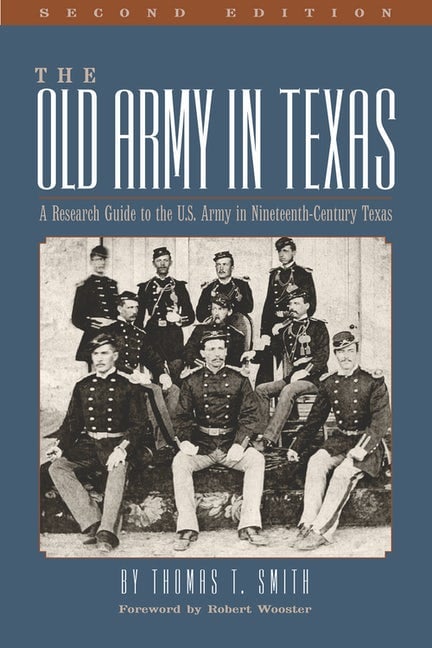
Carlisle (Pennsylvania) Evening Herald, March 9, 1914. “Col George Gibson Huntt,” Find A Grave Memorial (https://www.findagrave.com/memorial/6877194/george-gibson-huntt), accessed August 4, 2022. Robert W. Frazer, Forts of the West: Military Forts and Presidios and Posts Commonly Called Forts West of the Mississippi River to 1898 (Norman, Oklahoma: University of Oklahoma Press, 1965, 1972). J. Evetts Haley, Fort Concho and the Texas Frontier (San Angelo Standard-Times, 1952). Presidential Physician: Henry Huntt (https://doctorzebra.com/prez/dr_huntt.htm), accessed December 13, 2021. Records of the Adjutant General's Office, Record Group 94, National Archives and Records Administration, Washington, D.C. Returns from U.S. Military Posts, 1800–1916, National Archives and Records Administration, Washington, D.C. Robert Bryan Roberts, Encyclopedia of Historic Forts: The Military, Pioneer, and Trading Posts of the United States (New York: Macmillan, 1988). Thomas T. Smith, The Old Army in Texas: A Research Guide to the U.S. Army in Nineteenth Century Texas (Austin: Texas State Historical Association, 2000). United States Military Registers, 1902–1985 (Salem, Oregon: Oregon State Library).
The following, adapted from the Chicago Manual of Style, 15th edition, is the preferred citation for this entry.
William V. Scott, “Huntt, George Gibson,” Handbook of Texas Online, accessed March 09, 2026, https://www.tshaonline.org/handbook/entries/huntt-george-gibson.
Published by the Texas State Historical Association.
TID:
FHUGG
All copyrighted materials included within the Handbook of Texas Online are in accordance with Title 17 U.S.C. Section 107 related to Copyright and “Fair Use” for Non-Profit educational institutions, which permits the Texas State Historical Association (TSHA), to utilize copyrighted materials to further scholarship, education, and inform the public. The TSHA makes every effort to conform to the principles of fair use and to comply with copyright law.
For more information go to: http://www.law.cornell.edu/uscode/17/107.shtml
If you wish to use copyrighted material from this site for purposes of your own that go beyond fair use, you must obtain permission from the copyright owner.
- August 10, 2022
- August 10, 2022