History of Jester State Prison Farm: From Harlem Plantation to Modern Corrections
Published: 1952
Updated: February 1, 1995
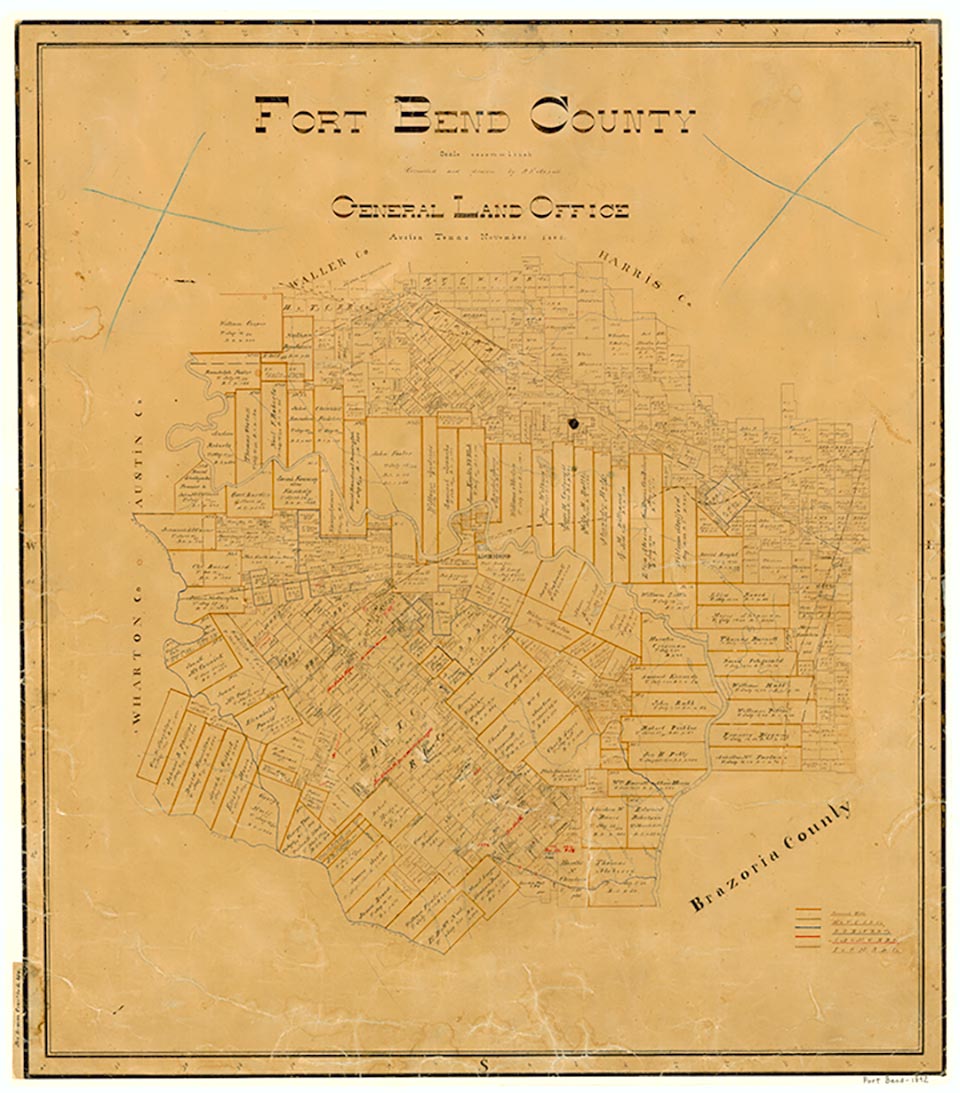
Jester State Prison Farm, formerly Harlem Prison Farm, Harlem, or Harlem Plantation, is a farm in Fort Bend County that is owned by the state of Texas and worked by convict labor. The state purchased the property in 1885 or 1886; Harlem was the second prison farm owned and run by the state. Before that time several privately held plantations that used convict labor leased from prisons had been highly successful (see PRISON SYSTEM). R. J. Ransom was placed in charge of the facility and oversaw its operation until his death in December 1895. In a report of 1890 the Penitentiary Board stated that the system was out of debt and that Harlem Plantation was valued at $200,000. The project was so successful that more prison farms were subsequently established.
In September 1913 guards at Harlem State Farm punished twelve black convicts by confining them in the "dark cell," an enclosure nine feet three inches long, seven feet 3½ inches wide, and six feet 11½ inches high. The inside temperature of the sun-drenched box rose to well over 100 degrees. The confined inmates screamed for help, but the guards later testified that they "had no reason to think there was anything wrong or that any of the convicts were in distress or suffering." Eight of the twelve convicts suffocated. The guards were charged with negligent homicide, but a preliminary investigation found that they had violated no law. A commissioners' investigation suggested that the prison officials had exercised "bad judgment." In 1925 Harlem covered 5,005 acres and housed 260 inmates. Officials established a spur track of the Galveston, Harrisburg and San Antonio Railway to load and transport sugarcane cultivated on the grounds, but the line was abandoned in 1929. In addition to raising cane, prisoners also operated a brick plant. In the 1950s the name of the facility was changed to Jester State Prison Farm, for Governor Beauford H. Jester, and under that name the farm, under the direction of the State Department of Corrections, was still in operation in 1989.
Bibliography:
The following, adapted from the Chicago Manual of Style, 15th edition, is the preferred citation for this entry.
Stephen L. Hardin, “Jester State Prison Farm,” Handbook of Texas Online, accessed March 09, 2026, https://www.tshaonline.org/handbook/entries/jester-state-prison-farm.
Published by the Texas State Historical Association.
TID:
ACJ01
- 1952
- February 1, 1995