La Cruz Blanca: A Historical Overview of the Medical Relief Organization During the Mexican Revolution
Published: August 27, 2024
Updated: August 27, 2024
La Cruz Blanca (Constitucionalista/Nacional) was founded on May 18, 1913, in Laredo, Texas, by Leonor Villegas de Magnón. During the Mexican Revolution, on March 17, 1913, Jesus Carranza’s troops attacked Nuevo Laredo. When Villegas de Magnón heard of the attack, she recruited her friend Jovita Idar, three nurses, and a doctor to offer medical relief. Villegas de Magnón, Jovita Idar, María Alegría, Rosa Chávez, Elvira Idar, and Dr. M. M. Dávila crossed the U.S.-Mexico border at Laredo into Nuevo Laredo, Tamaulipas. Aureliano Blanquet, a general for Victoriano Huerta, solicited their services, but they did not want to declare themselves Huertistas. Instead, La Cruz Blanca aligned itself with the Constitutionalists during this part of the Mexican Revolution. Later that year, Villegas de Magnón used her money and influence to establish La Cruz Blanca (The White Cross).
When Nuevo Laredo was attacked again on January 1, 1914, Magnón converted her home, school, and garage into a hospital to care for the wounded Constitutionalist soldiers. Fifty nurses and more than ten doctors treated 150 soldiers at Magnón’s makeshift hospital. Jovita Idar, whose family published La Crónica newspaper, was one of the volunteers. In June 1914 she joined La Cruz Blanca in Saltillo as its secretary. Idar’s siblings, Federico and Elvira, were also members of La Cruz Blanca.
Additionally, they were a part of La Cruz Blanca’s governing body. Villegas de Magnón was the president, Elvira was the vice president, Federico was elected secretary, and Eduardo Guerra was treasurer. Their motto and mission statement were: “Life, Honesty and Purity. Save the lives of those who were in danger or were entrusted to their charge. Honesty, respecting interests and property of others, and purity in their treatment and contact with others, that is what those who formed part of the institution committed themselves to and fulfilled.”
On April 5, 1914, with a brigade of twenty-six, La Cruz Blanca left Laredo for Torreón, Coahuila, via San Antonio and El Paso. On April 19, 1914, they established temporary hospitals in Torreón and formed new brigades in Durango, Santiago Papasquiaro, and San Pedro de las Colonias in Chihuahua. Several people from the original Laredo brigade journeyed across Mexico, including Severo Cantú, Angelita and Santos Esparza, Teresa G. Vda de Hernández, and the mother/daughter duos of Catarina and Luz Ibara and Margarita and Catarina de León. Some members of the Laredo brigade became heads of the new ones. For example, Elena Bauche Alcalde was the president of the La Cruz Blanca brigade in Chihuahua, and Mimi Eschausier was the president of the San Luis Potosí brigade. La Cruz Blanca also had an official photographer. Villegas de Magnón commissioned Eusebio Montoya to take photos of La Cruz Blanca and did not permit him to sell the negatives.
On May 20, 1914, Venustiano Carranza, the First Chief of the Constitutionalist Army, renamed La Cruz Blanca Constitucional to La Cruz Blanca Nacional. Villegas de Magnón was appointed the head of the organization. Despite the name change, La Cruz Blanca continued its medical relief duties with little to no change. However, when they arrived in Mexico City later that year, they were met with some opposition from the Mexican Red Cross. While in Mexico City, Villegas de Magnón wrote her resignation, essentially ending La Cruz Blanca’s mission in Mexico. Though she gave little detail about why she chose to resign, the presence of the Mexican Red Cross and La Cruz Blanca Neutral (Neutral White Cross founded in 1911 by Elena Arizmendi Mejía) signified that La Cruz Blanca Nacional was no longer needed in the interior. On September 14, 1914, La Cruz Blanca returned to Laredo. After Carranza’s death, Villegas de Magnón could no longer work for the Mexican government, and La Cruz Blanca dissolved.
Villegas de Magnón wrote a memoir about her time with La Cruz Blanca and the Mexican Revolution, however it proved difficult to publish. In 1951 and 1952, five different presses refused to publish Villegas de Magnón’s work. Eventually, Arte Publico Press published it posthumously in 1994. Villegas de Magnón’s words solidified La Cruz Blanca’s place in history.
Bibliography:
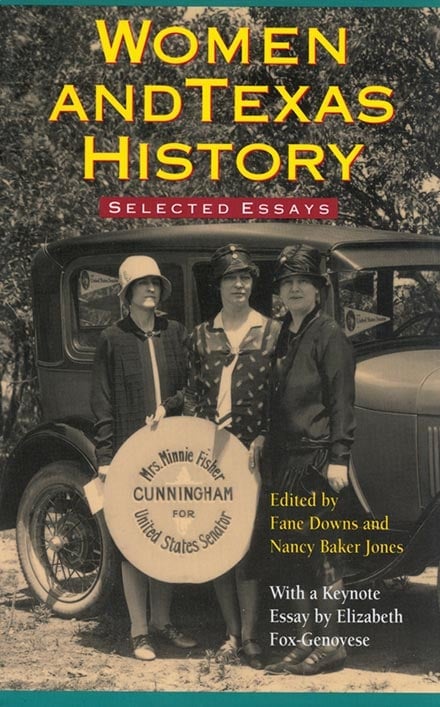
María Eugenia Guerra, Historic Laredo: An Illustrated History of Laredo & Webb County (San Antonio: Historical Publishing Network, 2001). Judith N. McArthur and Harold L. Smith, Texas Through Women's Eyes: The Twentieth-Century Experience (Austin: University of Texas Press, 2010). Stephanie Mitchell and Patience A. Schell, eds., The Women's Revolution in Mexico, 1910–1953 (Lanham, Maryland: Rowman & Littlefield Publishers, Inc., 2007). Leonor Villegas de Magnón, Clara Lomas, ed., The Rebel (Houston: Arte Público Press, 1994).
Time Periods:
Places:
The following, adapted from the Chicago Manual of Style, 15th edition, is the preferred citation for this entry.
Alejandra C. Garza, “La Cruz Blanca (Constitucionalista/Nacional),” Handbook of Texas Online, accessed March 09, 2026, https://www.tshaonline.org/handbook/entries/la-cruz-blanca-constitucionalistanacional.
Published by the Texas State Historical Association.
TID:
VNCBC
All copyrighted materials included within the Handbook of Texas Online are in accordance with Title 17 U.S.C. Section 107 related to Copyright and “Fair Use” for Non-Profit educational institutions, which permits the Texas State Historical Association (TSHA), to utilize copyrighted materials to further scholarship, education, and inform the public. The TSHA makes every effort to conform to the principles of fair use and to comply with copyright law.
For more information go to: http://www.law.cornell.edu/uscode/17/107.shtml
If you wish to use copyrighted material from this site for purposes of your own that go beyond fair use, you must obtain permission from the copyright owner.
- August 27, 2024
- August 27, 2024
This entry belongs to the following special projects: