The Legacy of Sylvia Routh: A Pioneering Free Black Woman Landowner in Houston (ca. 1806–1889)
Published: October 3, 2024
Updated: October 29, 2025
Sylvia Routh was one of the first and few free Black women landowners in Houston prior to the Civil War. She was born around 1806 in Virginia. She was enslaved by James Routh, a White farmer from Louisiana, who introduced fifteen slaves to Austin’s Colony in 1827 and acquired a 1,107-acre land grant along Middle Bayou in what became Harris County in 1832.
James died on July 19, 1837. In his will he bequeathed “full freedom” to Sylvia and her six children—Sally Ann, Mary Jane, Emily, Jackson, Isabella, and Margaret—as well as her “future increase” on the condition that Sally Ann and Mary Jane continue to live as servants of Ophelia Morgan, wife of James Morgan, until their twenty-first birthdays. James Routh was likely the father of some or all of the children. His will also granted 320 acres to Sylvia and her children, provided for the education of the children, and emancipated another slave named Jim. To his brother William, James Routh left two other slaves and a quarter league of land. The executors of the will and sponsors of Sylvia and her children were James Morgan and George M. Patrick.
Early the following year William Routh contested the will and sought to re-enslave Sylvia and her family, although he was ultimately unsuccessful. On April 14, 1838, Morgan applied to have the “slave” Sylvia imprisoned for refusing “to submit to his authority.” Two days later he applied for Jim’s commitment as well. It is not known how long Routh was jailed, but on November 27, 1843, she petitioned for guardianship of her children. The request was granted. After several years, she finally won her freedom, received the title to the estate James Routh had willed her, and was given custody of all of her children.
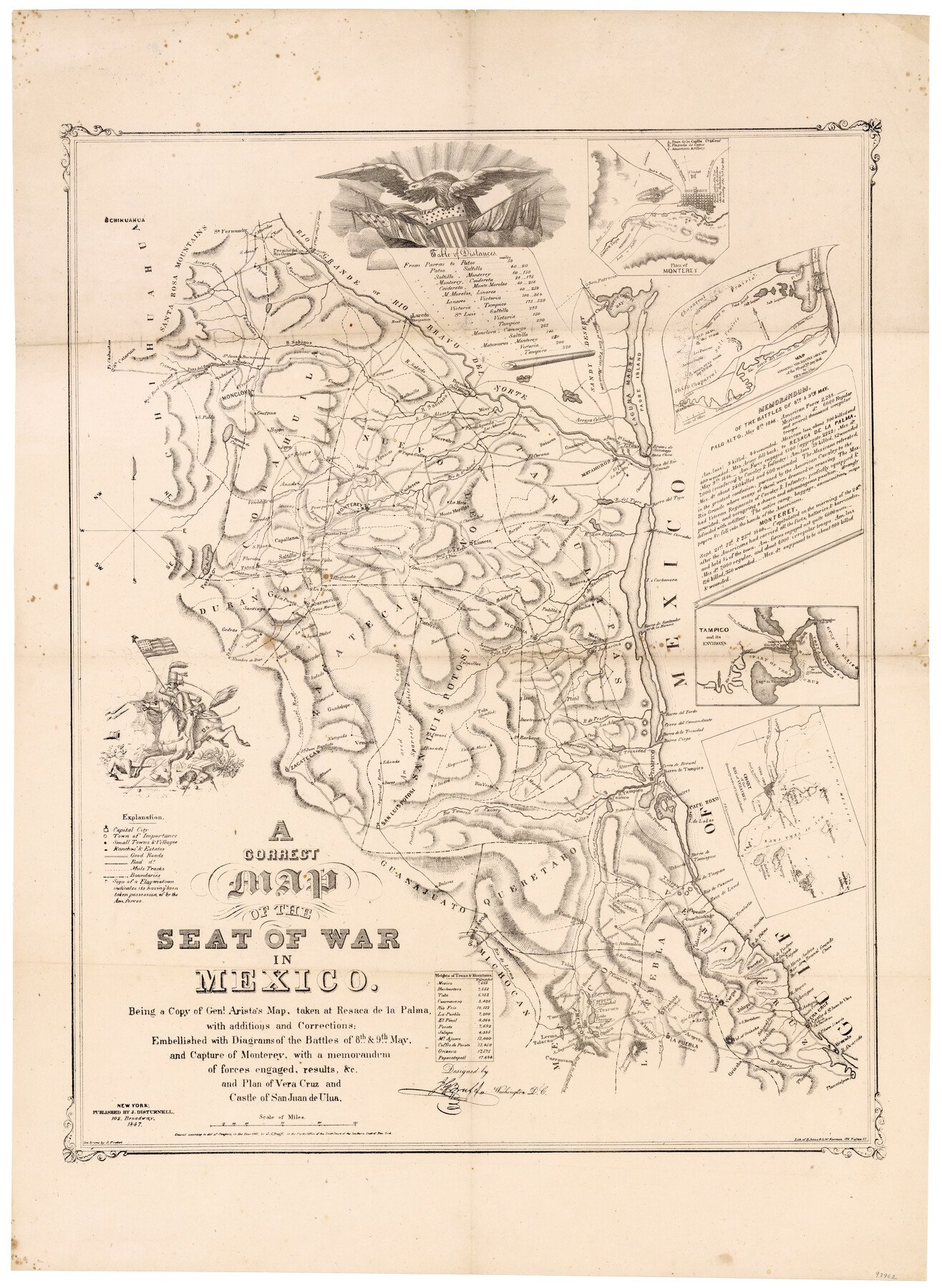
On October 3, 1845, Routh purchased Lot 5, Block 12 in Houston from planter John Rundell for $200. She lived there until the late 1850s. The land she owned was located near Buffalo Bayou on the edge of the city. The property bordered a dry gully that ran through what is today downtown Houston and emptied into Buffalo Bayou. Routh owned a number of merchant ships, and in 1846 one of her sons drowned in a shipwreck off the coast of Mexico. A brick-lined basement was built under Routh’s home, and some historians speculate that she used this room to hide runaway slaves and helped smuggle them to Mexico.
In 1847 Routh purchased lots 9, 10, and 11 in Block 47 in Houston, and in 1848 she bought Lot 10 in Block 12, across from her basemented house. On March 9, 1859, she sold all her land for $1,100 and moved to Crescent City, California. By 1870 Routh had moved to Thurston County, Washington, where she died on November 16, 1889.
Bibliography:
Sara Louise Blanchett, The “Other Side”: Public Memory and the Life of Sylvia Routh in Houston, Texas, 1837–1859 (M.A. thesis, University of North Carolina, 2013). Houston Chronicle, January 21, 2001. Andrew Forest Muir, “The Free Negro in Harris County, Texas,” Southwestern Historical Quarterly 46 (January 1943).
Categories:
Time Periods:
Places:
The following, adapted from the Chicago Manual of Style, 15th edition, is the preferred citation for this entry.
María Esther Hammack, “Routh, Sylvia,” Handbook of Texas Online, accessed March 09, 2026, https://www.tshaonline.org/handbook/entries/routh-sylvia.
Published by the Texas State Historical Association.
TID:
FROVK
All copyrighted materials included within the Handbook of Texas Online are in accordance with Title 17 U.S.C. Section 107 related to Copyright and “Fair Use” for Non-Profit educational institutions, which permits the Texas State Historical Association (TSHA), to utilize copyrighted materials to further scholarship, education, and inform the public. The TSHA makes every effort to conform to the principles of fair use and to comply with copyright law.
For more information go to: http://www.law.cornell.edu/uscode/17/107.shtml
If you wish to use copyrighted material from this site for purposes of your own that go beyond fair use, you must obtain permission from the copyright owner.
- October 3, 2024
- October 29, 2025
This entry belongs to the following special projects: