The Life and Career of Dr. Fung T. Sam: A Pioneer Chinese Physician in El Paso (1864–unknown)
By: William V. Scott
Published: August 21, 2024
Updated: August 21, 2024
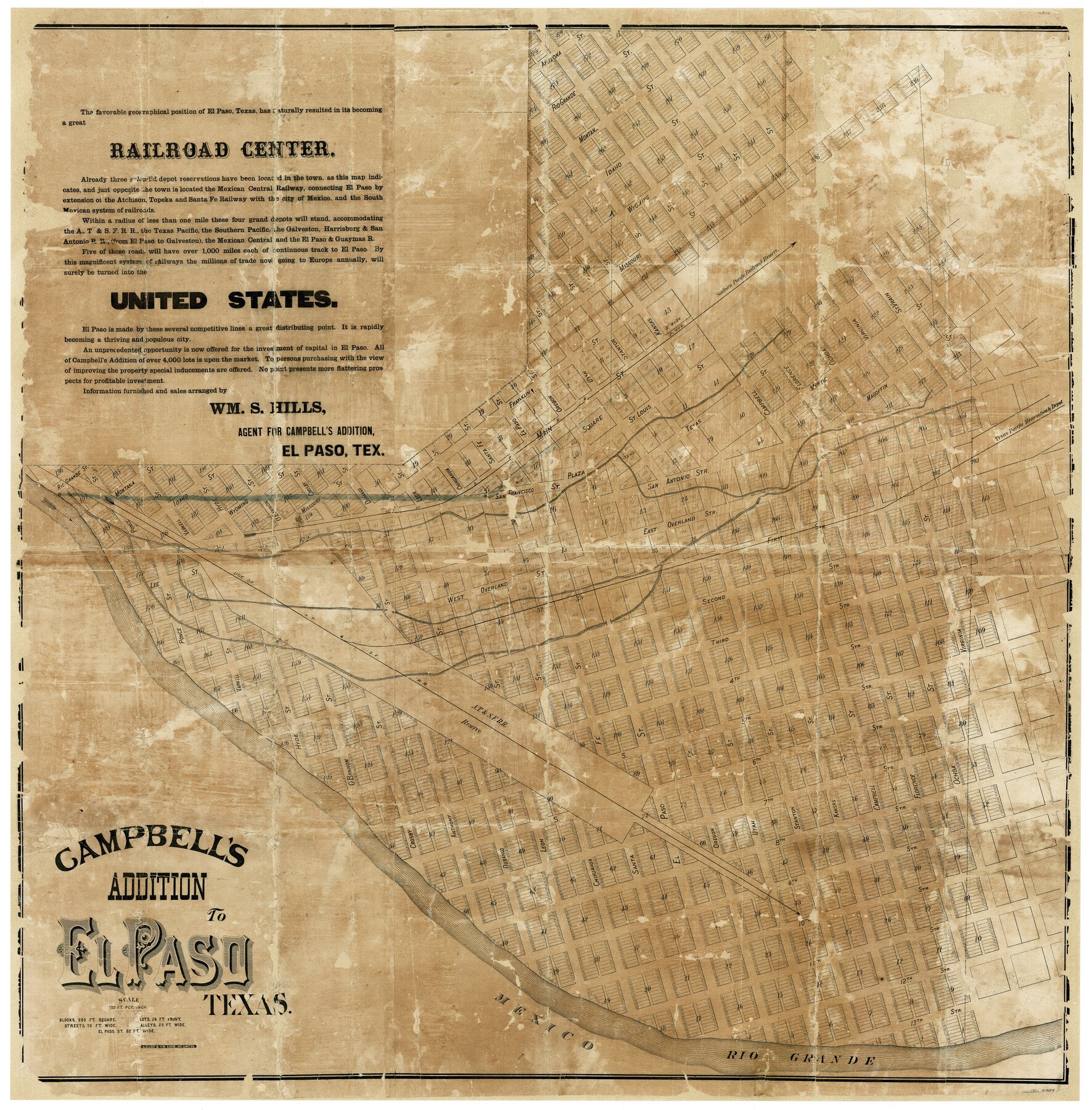
Fung T. Sam, Chinese physician and surgeon, practiced medicine in El Paso at the turn of the twentieth century. According to the 1900 U.S. census, he was born in China in 1864 and immigrated to the United States in 1880. He was listed on the 1900 census as a widower, and the census further recorded that he could read, write, and speak English. Sam established a medical practice in El Paso. In an advertisement in the August 31, 1899, edition of the El Paso International Daily Times, he claimed to represent the sixth generation of a family famous worldwide for their “successful treatment of all diseases of the human body.” Sam stated that he was a graduate of the “famous medical college” in Canton City, China. His office was located at 311 St. Louis Street, in the Commercial Hotel block of El Paso, where Sam ran a “Chinese tea and herb sanitarium.” He was reputed to have successfully treated “thousands of patients with his herbal remedies and his skillful diagnosis of the pulse.”
In August 1899 Dr. F. T. Sam was arrested for unlawfully practicing his profession and placed under a $100 appearance bond. The doctor stated that he possessed his proper credentials and diploma and saw no reason for his arrest. Sam was registered with the appropriate authorities and claimed, "I attribute it to my enemies, they are jealous of me.” He was found guilty and fined by the court. A technicality set aside the court’s verdict, and Sam was released on a $500 cash bond. In December of the same year, he was arrested again for two charges, including failure to file a graduation certificate from a medical college and an improper certificate.
Some newspaper editions inverted the doctor’s initials and advertised him as Dr. T. F. Sam. The October 6, 1899, edition of the El Paso Daily Herald claimed that Dr. T. F. Sam “has done much good work here.” The newspaper stated that the doctor, of Los Angeles, opened an office about two months prior and had successfully treated more than 150 patients with “complicated cases without operation.” The newspaper item also included a listing of specific patients and some of their ailments, including consumption, whooping cough, kidney troubles, and “chronic blood dyspepsia.” Sam’s patients included both Blacks and Whites in El Paso. Some patients traveled for treatment from as far as Baird and Fort Worth. Dr. Sam claimed to be able to drive all forms of poison out of a patient’s system, and most treatments claimed to cure all disease conditions by prescribing “Dr. F. T. Sam’s Vegetable Compound.” The advertisements stated that no minerals were used in the compound, and Dr. Sam would also mail his medicine to any address. After Sam’s legal troubles, he would conclude his ads, stating, "The secret of his success is: He cures the people.”
On the 1900 census, Sam was listed as an El Paso physician, but his name appeared as Foug Fung Sam. He rented office space on St. Louis Street, where he resided with two partners: Yee Hong, a thirty-year-old medical student, and Wah Yee Wing, a forty-two-year-old merchant. The residence/business also included two Chinese boarders.
In May 1900 a criminal jury returned a not guilty verdict on Sam’s charge of illegally practicing medicine. The following November, a newspaper ad listed his business as “DR. F. T. Sam, Sanitarium and Chinese Teas.” It carried much the same rhetoric as earlier newspaper promotions, but it added, "Cured over 500 diseases in this city.…He cures the people of catarrh [inflammation of mucous membranes in the throat and paranasal sinuses], consumption, rupture, asthma, cough, gonorrhea, lost manhood, pneumonia, fever stricture, erysipelas [bacterial infection of the superficial layer of the skin], syphilis, rheumatism, paralysis and all female troubles.” By 1900 Dr. Sam held regular office hours from 9 am to 7 pm (presumably daily). In the 1902 city directory for El Paso, Dr. Sam was still officing at 311 St. Louis.
The first newspaper advertisement for Dr. F.T. Sam since January 1901 appeared in the July 19, 1909, edition of the El Paso Morning Times when he used the name “Herbal Remedy Co.” On September 16, 1909, Sam’s ad read: “Chinese Drugs, Medicines, and herbs for all kinds of sickness. All varieties of fine teas.” His address was at 610 San Antonio Street in El Paso.” Sam was still listed as an El Paso physician in the New Mexico state business directory in 1913.
Sam may have relocated to Ogden, Utah, by 1915. In Ogden, city directories listed “F. T. Sam & Co. Sanitarium Chinese Herbs and Teas,” where a man named F. T. Sam and Daniel Ong were Chinese herbalists who boasted “20 years of Successful Experience in Compounding Chinese Herbs in the United States.” F. T. Sam & Co. Sanitarium was listed in the city directory in Ogden in 1915 and 1917. After the sanitarium closed, Daniel Ong continued to occupy the same address, where he operated a Chinese import store. The end of Dr. Fung T. Sam’s career is unknown, as is any information related to his death.
Bibliography:
El Paso Daily Herald, August 15, 1899; September 2, 1899; October 6, 1899; December 14, 1899; May 10, 1900; November 20, 1900. El Paso International Daily Times, August 31, 1899. El Paso Morning Times, July 19, 1909; September 16, 1909.
Time Periods:
Places:
The following, adapted from the Chicago Manual of Style, 15th edition, is the preferred citation for this entry.
William V. Scott, “Sam, Fung T.,” Handbook of Texas Online, accessed March 09, 2026, https://www.tshaonline.org/handbook/entries/sam-fung-t.
Published by the Texas State Historical Association.
TID:
FSAM1
All copyrighted materials included within the Handbook of Texas Online are in accordance with Title 17 U.S.C. Section 107 related to Copyright and “Fair Use” for Non-Profit educational institutions, which permits the Texas State Historical Association (TSHA), to utilize copyrighted materials to further scholarship, education, and inform the public. The TSHA makes every effort to conform to the principles of fair use and to comply with copyright law.
For more information go to: http://www.law.cornell.edu/uscode/17/107.shtml
If you wish to use copyrighted material from this site for purposes of your own that go beyond fair use, you must obtain permission from the copyright owner.
- August 21, 2024
- August 21, 2024
This entry belongs to the following special projects: