
Texas Day by Day
Find out what happened today in Texas History.
3 result(s) found:
Falvel given command of Flash
189 years ago on March 12th, 1836
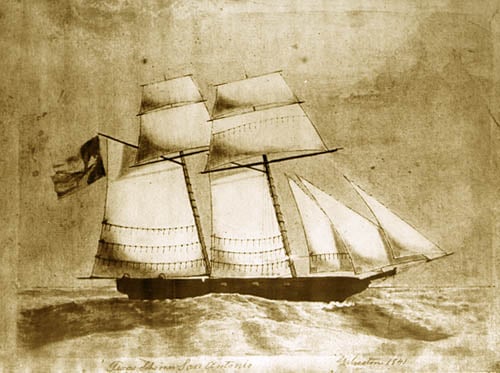
On this day in 1836, Luke A. Falvel was commissioned captain of the Flash. On the same day, the crew was sworn in. The vessel was a privateer fitted out for service in the Texas Revolution. Privateers, private ships carrying letters of marque from the Republic of Texas, were used to supplement the small Texas Navy. The Flash was ordered to proceed to the Brazos River to pick up victims of the Runaway Scrape, take them to Morgan's Point, and defend that place in case of a Mexican attack. The ship sailed on several more missions before it ran aground and was lost in May 1837.
Rejected portrait of LBJ draws record crowd to Snyder museum
58 years ago on March 12th, 1967

On this day in 1967, a record number of visitors went to the Diamond M Museum in Snyder, Texas, to see Peter Hurd's official portrait of President Lyndon B. Johnson, which Johnson had rejected and declared "the ugliest thing I ever saw." Hurd, a native of New Mexico born in 1904, studied under N. C. Wyeth in the 1920s and first came to national attention in the 1930s. Many of his paintings and murals are in Texas; perhaps the most notable mural is in the Museum of Texas Tech University, Lubbock. The Johnson portrait episode inspired the punning comment that "artists should be seen around the White House--but not Hurd." The Diamond M Museum put the portrait on display just before it was moved to the Smithsonian Institution's National Portrait Gallery in Washington, D.C., where it hangs today. The Diamond M Museum closed in 1992, and its collection was given to the Museum of Texas Tech University.
Galveston longshoremen strike
105 years ago on March 12th, 1920
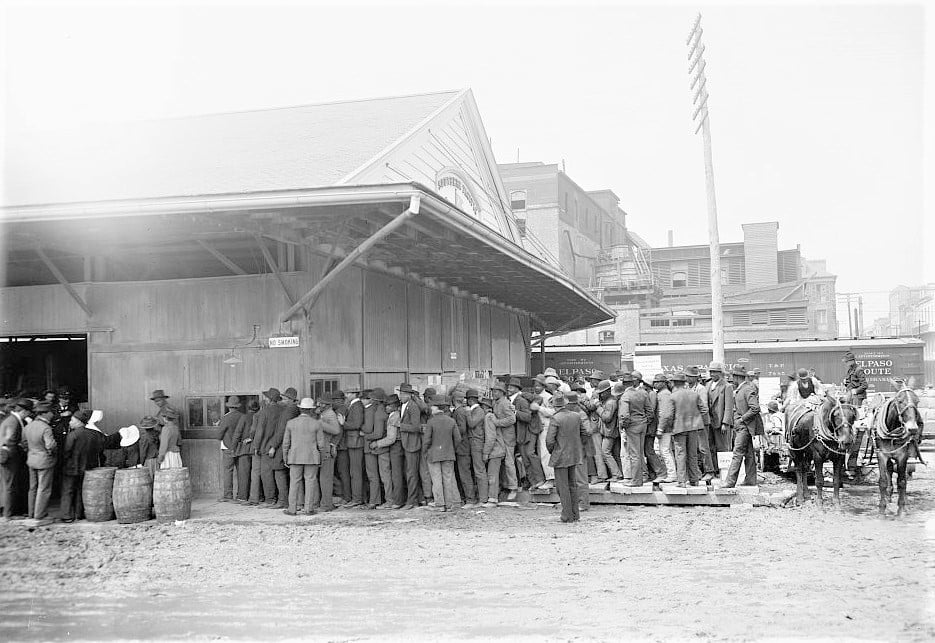
On this day in 1920, approximately 1,600 dockworkers in Galveston went on strike as part of a nationwide walkout. The ensuing battle between organized labor and open-shop factions stretched on for months. The Mallory and Morgan steamship lines used scab workers to combat the strikers, who were members of the International Longshoremen’s Association (ILA). The company employed white scabs to replace black ILA locals and black scabs to replace white ILA workers to inflame racial tensions. In an effort to prevent violence, Governor William P. Hobby deployed a detachment of Texas Rangers, and the Mallory company, fearful of conflict, suspended its Galveston operations. In June the governor declared martial law and dispatched 1,000 national guard troops. Eventually negotiations between the city of Galveston and the state government led to the withdrawal of the national guard, and Galveston ILA locals finally resumed work between December 1920 and July 1921, but with a smaller pay increase than they had sought. Ultimately, the dispute was a factor that helped foster antilabor attitudes among business and political entities in the state.
Page 1 of 1


Want more? Get the book!
From Cabeza de Vaca's ship-wreck in 1528 through the Texas Revolution to present day—almost 500 years of recorded history—a myriad of significant events in Texas history have occurred. These events are arranged by day of the year to allow the reader to see into the past on any specific day.
Now Available!